

Police officers who use excessive force during an arrest, corrections officials who deny medical care to inmates, government employers who retaliate against employees for exercising their First Amendment rights, and municipalities that maintain policies or customs that cause constitutional violations can all be held accountable through Section 1983 litigation. These cases are among the most complex and consequential in federal practice, requiring attorneys who understand constitutional law, federal civil procedure, qualified immunity doctrine, and the specific standards that apply to each category of constitutional claim. A Florida civil rights litigation lawyer at The Rubin Firm represents individuals whose constitutional and civil rights have been violated by government actors, pursuing accountability, compensation, and systemic change through federal court litigation.
Your rights matter. When they are violated, so does accountability. Call The Rubin Firm at (772) 283-2004, complete our contact form, or start a live chat.
Section 1983: The Foundation of Civil Rights Litigation
Section 1983 is the primary federal statute that enables individuals to enforce their constitutional rights against state and local government actors. The statute provides that every person who, under color of state law, subjects any citizen to the deprivation of rights secured by the Constitution and federal laws shall be liable to the injured party. Two elements must be proven in every Section 1983 case: first, that the defendant acted under color of state law (meaning they used the authority of their government position), and second, that the defendant’s conduct deprived the plaintiff of a right protected by the Constitution or federal statute. Section 1983 does not create substantive rights; rather, it provides the procedural mechanism for enforcing rights established by the Constitution and other federal laws.
Section 1983 claims are filed in federal district court, and successful plaintiffs can recover compensatory damages (for physical injury, emotional distress, and financial harm), punitive damages (in cases of egregious misconduct), injunctive and declaratory relief (court orders requiring changes in policy or practice), and attorney fees under 42 U.S.C. Section 1988.
injured? Let Us Help You Get Justice. Free consultation. No fees unless we win your case.
Types of Civil Rights Claims
Due Process Violations
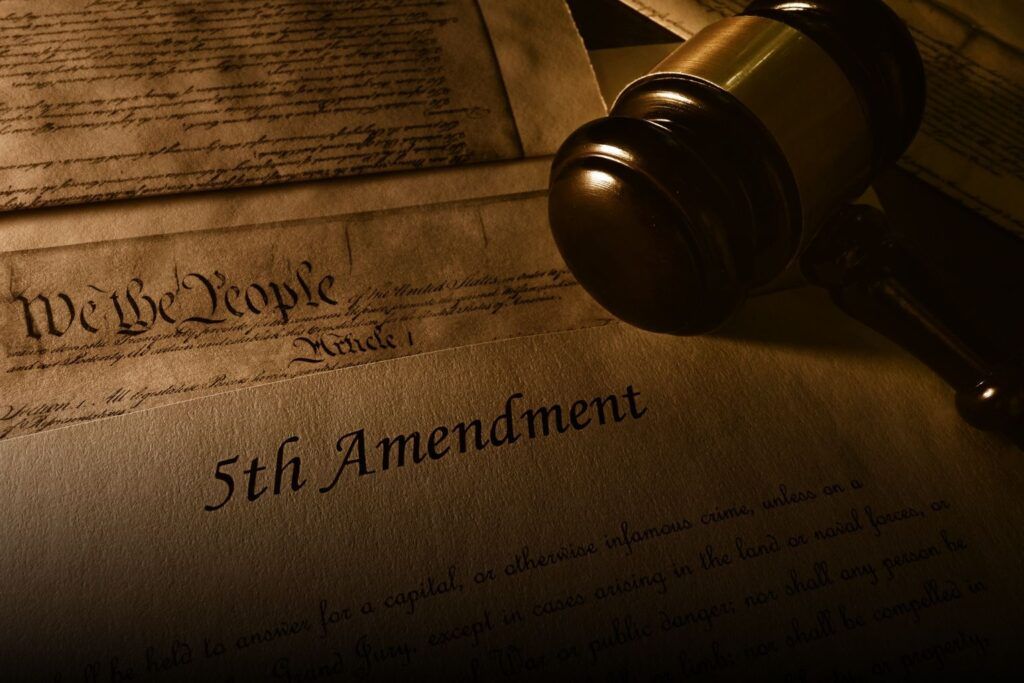
The Fourteenth Amendment’s Due Process Clause protects individuals from the deprivation of life, liberty, or property without due process of law. Substantive due process claims arise when government conduct is so egregious that it shocks the conscience, regardless of the procedural protections provided. Procedural due process claims arise when the government deprives an individual of a protected interest (such as employment, professional licensure, or liberty) without adequate notice and an opportunity to be heard. Both categories of due process claims are actionable under Section 1983.
Equal Protection Violations
The Fourteenth Amendment’s Equal Protection Clause prohibits government actors from treating similarly situated individuals differently based on race, national origin, religion, sex, or other protected characteristics without a sufficient justification. Equal protection claims under Section 1983 can involve selective enforcement of laws against members of a particular racial or ethnic group, discriminatory policies or practices by government agencies, and disparate treatment in the provision of government services or benefits.
Excessive Force
Excessive force claims arise under the Fourth Amendment’s prohibition against unreasonable seizures. When a law enforcement officer uses more force than is reasonably necessary to effectuate an arrest, restrain a suspect, or maintain order, the use of force may violate the Constitution. Courts evaluate excessive force claims under an objective reasonableness standard, considering the severity of the crime at issue, whether the suspect posed an immediate threat to the safety of officers or others, and whether the suspect was actively resisting arrest or attempting to flee. The analysis accounts for the fact that officers must make split-second decisions in tense, uncertain, and rapidly evolving situations, but it does not excuse force that no reasonable officer would have considered justified under the circumstances.
False Arrest and Unlawful Detention
The Fourth Amendment protects individuals from unreasonable seizures, which includes arrests made without probable cause. A false arrest claim under Section 1983 requires proof that the officer lacked probable cause to believe the plaintiff had committed a crime. Probable cause exists when the facts and circumstances known to the officer at the time of the arrest would lead a reasonably prudent person to believe that a crime has been or is being committed. If the arrest was made without probable cause and without a valid warrant, the individual may have a Section 1983 claim for false arrest. Related claims can arise from prolonged detention without arraignment, detention based on fabricated evidence, and pretextual arrests motivated by racial animus or retaliation for the exercise of constitutional rights.
Malicious Prosecution
A malicious prosecution claim under Section 1983 arises when a government actor initiates or continues a criminal prosecution without probable cause and with malice, and the prosecution terminates in the plaintiff’s favor. The Supreme Court’s 2022 decision in Thompson v. Clark clarified that a favorable termination does not require an affirmative indication of innocence; it is sufficient that the prosecution ended without a conviction. Malicious prosecution claims frequently arise alongside false arrest claims and can involve allegations that officers fabricated evidence, made false statements in arrest affidavits, or suppressed exculpatory evidence.
First Amendment Retaliation
Government actors violate the First Amendment when they take adverse action against individuals in retaliation for the exercise of protected speech, assembly, petition, or religious exercise. First Amendment retaliation claims can involve public employees who are demoted, terminated, or disciplined for protected speech or whistleblowing, individuals who are arrested or cited in retaliation for recording police activity or expressing criticism of government officials, and protesters or demonstrators who are subjected to force, arrest, or other adverse action because of the content of their expression.
Qualified Immunity: The Principal Defense
Qualified immunity is a judicially created doctrine that shields government officials from personal liability for actions taken in their official capacity, unless the official violated a clearly established statutory or constitutional right that a reasonable person would have known. The qualified immunity analysis involves two questions: whether the facts alleged or shown make out a violation of a constitutional right, and whether the right was clearly established at the time of the defendant’s conduct. A right is clearly established when existing precedent places the lawfulness of the conduct beyond debate, such that every reasonable official would understand that the conduct is unlawful.
Qualified immunity is the most frequently invoked defense in Section 1983 litigation, and overcoming it requires careful legal analysis and strategic presentation of the facts. The Rubin Firm evaluates the qualified immunity landscape for every civil rights claim, identifying the specific precedent that establishes the right at issue and framing the facts to demonstrate that the defendant’s conduct fell outside the bounds of what any reasonable official could have considered lawful.
Municipal Liability Under Monell
Under the Supreme Court’s decision in Monell v. Department of Social Services, municipalities and other local government entities can be held liable under Section 1983 when an official policy, custom, or practice causes the constitutional violation. Municipal liability requires proof that the violation resulted from an official policy adopted by the municipality’s authorized decisionmaker, a widespread custom or practice that, although not formally authorized, is so prevalent and well-settled that it constitutes a policy, a failure to train employees that amounts to deliberate indifference to the constitutional rights of persons with whom those employees come into contact, or ratification of an employee’s unconstitutional conduct by a final policymaker.
Monell claims are complex and document-intensive, often requiring evidence of multiple similar incidents to establish a pattern of unconstitutional conduct. The Rubin Firm investigates municipal policies, training records, disciplinary histories, and patterns of complaints to build Monell claims that hold municipalities accountable for systemic constitutional violations.
Employment Discrimination and Retaliation
Civil rights litigation extends beyond police misconduct to include employment discrimination claims under federal and state law. Title VII of the Civil Rights Act of 1964 prohibits employment discrimination on the basis of race, color, religion, sex, and national origin. The Americans with Disabilities Act (ADA) prohibits disability-based discrimination. The Age Discrimination in Employment Act (ADEA) prohibits age-based discrimination against employees 40 and older. Florida’s Civil Rights Act (Florida Statutes Chapter 760) provides additional state-level protections. The Rubin Firm represents employees and former employees in discrimination, harassment, and retaliation claims arising from adverse employment actions, hostile work environments, failure to accommodate, and wrongful termination.
Conditions of Confinement and Prisoner Rights
Incarcerated individuals retain constitutional rights, including the Eighth Amendment’s prohibition against cruel and unusual punishment and the Fourteenth Amendment’s due process protections. Claims arising from conditions of confinement include deliberate indifference to serious medical needs, excessive force by corrections officers, unconstitutional conditions of confinement (overcrowding, inadequate sanitation, unsafe conditions), and failure to protect inmates from violence by other inmates. These claims require proof that the defendant acted with deliberate indifference to a substantial risk of serious harm.
Damages in Civil Rights Litigation
Compensatory damages:
Compensation for physical injuries, medical expenses, lost income, pain and suffering, emotional distress, and other losses caused by the constitutional violation.
Punitive damages:
Available in cases involving egregious, willful, or reckless misconduct, punitive damages are intended to punish the individual defendant and deter similar conduct. Punitive damages are not available against municipalities.
Nominal damages:
A court may award nominal damages (typically one dollar) to recognize that a constitutional violation occurred even when the plaintiff cannot prove compensable harm.
Injunctive and declaratory relief:
Court orders requiring changes in policy, practice, or conduct to prevent future violations.
Attorney fees:
Under 42 U.S.C. Section 1988, prevailing plaintiffs in Section 1983 actions are entitled to recover reasonable attorney fees, making civil rights enforcement economically viable even when the compensable damages are modest.
Why The Rubin Firm for Civil Rights Litigation
Constitutional expertise
Federal court experience
We litigate civil rights cases in federal district courts in Florida, where these cases are subject to unique procedural and evidentiary rules.
Investigation capability
Monell litigation
We build municipal liability cases that hold government entities accountable for policies and practices that cause constitutional violations.
Employment discrimination
Steps to Take If Your Civil Rights Have Been Violated
Document everything:
Be mindful of deadlines:
Preserve evidence:
Contact The Rubin Firm
Seek medical attention:
Obtain medical treatment for any injuries and keep records of all treatment received.
We’re Here To Heil You Recover Compensation For:
- Injury or damages
- Injury & Medical
- Injury or damages
Serving Clients Throughout Florida
The Rubin Firm handles civil rights litigation in the Southern, Middle, and Northern Districts of Florida, representing individuals whose constitutional rights have been violated by law enforcement, corrections officials, government employers, and other state actors.
Referral Partnerships for Civil Rights Matters
Attorneys who encounter civil rights issues, including criminal defense attorneys whose clients have been subjected to police misconduct, trust The Rubin Firm. Contact us to discuss a referral.
Frequently Asked Questions About Civil Rights Litigation
What is a Section 1983 claim?
A Section 1983 claim is a federal lawsuit brought against a state or local government official who has violated an individual’s constitutional or federal statutory rights while acting under color of state law. Common claims involve excessive force, false arrest, malicious prosecution, First Amendment retaliation, and due process violations.
What is qualified immunity?
Qualified immunity is a legal doctrine that protects government officials from personal liability unless their conduct violated a clearly established constitutional right that a reasonable official would have known. Overcoming qualified immunity requires showing that the specific right was established by existing case law at the time of the violation.
Can I sue a city or county for police misconduct?
Yes. Under Monell v. Department of Social Services, municipalities can be liable under Section 1983 when an official policy, custom, failure to train, or ratification by a policymaker caused the constitutional violation. These claims require proof of a pattern or policy, not just a single officer’s misconduct.
What damages can I recover in a civil rights case?
Compensatory damages for physical injury, emotional distress, and financial harm. Punitive damages in cases of egregious misconduct. Attorney fees under 42 U.S.C. Section 1988. Injunctive and declaratory relief to prevent future violations.
How long do I have to file a civil rights lawsuit in Florida?
The statute of limitations for most Section 1983 claims in Florida is four years from the date of the violation. However, specific circumstances may affect the applicable deadline, and early consultation with an attorney ensures that important deadlines are not missed.
$150 Million
When the Government Violates Your Rights, You Have the Right to Fight Back.
Civil rights litigation holds government actors accountable for constitutional violations. The Florida civil rights litigation lawyers at The Rubin Firm bring the constitutional expertise and federal court experience these cases demand.
Call (772) 283-2004. Complete our form or chat live.
 4.9 Rating on