

A musician who writes a hit song and records it for a label may not own the master recording, may share the publishing income with a co-writer who contributed one line, may receive less than a penny per stream after the label’s deductions, and may be contractually obligated to deliver four more albums before seeing a royalty check. An actor who lands a breakout role may discover that the production agreement assigns derivative rights to the studio, that residual calculations are opaque and consistently unfavorable, and that the morality clause gives the network unilateral termination power. A content creator who builds an audience of millions may learn that the platform’s terms of service grant the platform a perpetual, irrevocable license to their content. In each case, the creative professional’s financial outcome is determined not by the quality of their work but by the quality of their legal representation. A Florida entertainment lawyer at The Rubin Firm represents musicians, actors, producers, writers, content creators, labels, studios, and entertainment companies, providing the industry expertise and legal precision that protect creative careers and maximize financial outcomes.
Your creative career is a business. Protect it like one. Call The Rubin Firm at (772) 283-2004, complete our contact form, or start a live chat.
Music Industry Legal Services

The music industry involves a complex web of legal relationships between artists, songwriters, producers, labels, publishers, distributors, managers, agents, and performing rights organizations. Each relationship is governed by contracts that allocate creative control, financial participation, and intellectual property ownership. The Rubin Firm provides comprehensive legal services for every stage of a music career and every type of music industry transaction.
Recording contracts
Publishing agreements
We negotiate co-publishing, administration, and sub-publishing deals that protect songwriters’ ownership interests and maximize revenue from mechanical, performance, sync, and print royalties.
Producer agreements
We draft and negotiate producer agreements that define the producer’s compensation (advance, royalty points, backend participation), creative contribution credits, and ownership interests in the master recordings.
Distribution deals
Sync licensing
Touring and live performance
injured? Let Us Help You Get Justice. Free consultation. No fees unless we win your case.
Film and Television Legal Services
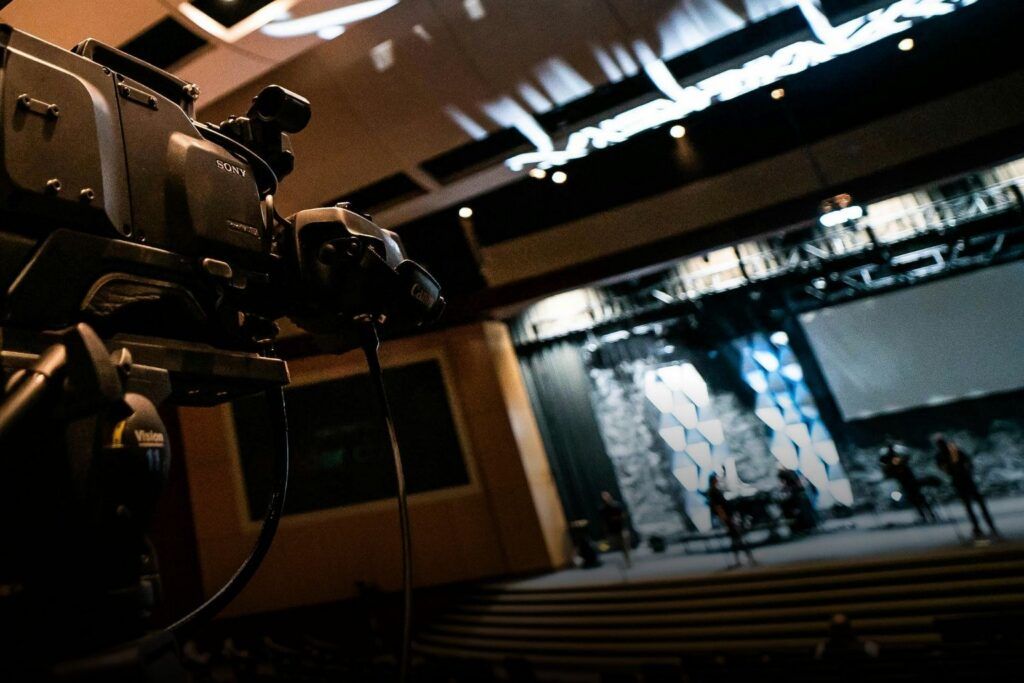
Film and television production involves layers of interconnected agreements that must work together to bring a project from concept to distribution. The legal framework for a production includes development agreements (option and purchase agreements for underlying intellectual property), production agreements (producer, director, writer, and talent deals), financing agreements (equity investment, gap financing, tax credits, pre-sales), production service agreements (crew, facilities, equipment, locations), music licensing (master use and sync licenses for the soundtrack), and distribution agreements (theatrical, streaming, broadcast, home video, international).
Each agreement involves negotiation of compensation, creative control, credit, intellectual property ownership, and revenue participation that must be consistent across the entire deal structure. A conflict between the talent agreement and the distribution agreement can prevent exploitation of the project in specific territories or media. The Rubin Firm handles individual agreements within productions and the overall legal architecture of complex multi-party deals, ensuring consistency and protecting our client’s interests at every level. For details on specific contract types, visit our entertainment contracts page.
Digital Content and Creator Economy Legal Services

The creator economy has produced a new generation of entertainment professionals who build audiences and generate revenue through digital platforms. YouTube creators, podcasters, TikTok influencers, Twitch streamers, and newsletter writers operate at the intersection of content creation, brand marketing, and media distribution, and the legal issues they face are as complex as those in traditional entertainment, though the industry norms and contract structures are still evolving.
Platform agreements
Brand partnerships
MCN and talent management agreements
Merchandise and licensing
Content ownership and IP protection
Intellectual Property Protection for Entertainment Professionals
Intellectual property is the foundation of every entertainment career. A musician’s catalog, an actor’s image, a writer’s body of work, a creator’s brand identity: these are all intellectual property assets that require legal protection to maintain their value. The Rubin Firm integrates IP protection into every aspect of our entertainment practice.
Weather and road conditions:
We register copyrights for musical compositions, sound recordings, screenplays, literary works, visual art, and other creative works with the U.S. Copyright Office.
Trademark protection:
Publicity rights:
IP enforcement:
We enforce our clients’ intellectual property rights through DMCA takedowns, cease-and-desist communications, and litigation when necessary.
For more on our intellectual property capabilities, visit our copyright protection and trademark registration pages.
Entertainment Business Formation and Transactions
Entertainment professionals frequently form business entities to manage their careers, produce content, hold intellectual property, and structure their financial affairs. We advise on the formation and governance of production companies, record labels, publishing companies, management firms, and personal service corporations. We also handle entertainment industry transactions including catalog acquisitions, label acquisitions, joint ventures, co-production deals, and investment transactions. These corporate and transactional matters require an attorney who understands both the legal structures involved and the specific business realities of the entertainment industry.
Union and Guild Compliance
Significant segments of the entertainment industry are governed by union collective bargaining agreements that establish minimum compensation, working conditions, residual structures, and other terms. SAG-AFTRA governs actors, voice performers, and recording artists. The DGA governs directors. The WGA governs writers. The AFM governs musicians. IATSE governs crew and technical personnel. Compliance with applicable union agreements is mandatory for productions operating under union jurisdiction, and failure to comply can result in grievances, fines, production shutdowns, and reputational damage. The Rubin Firm advises both individual entertainment professionals on their union rights and obligations and production companies on union compliance requirements.
Why The Rubin Firm for Entertainment Law
Full-spectrum practice
Industry knowledge
IP expertise
Creator advocacy
Dispute resolution
Business counsel
We advise on entity formation, governance, transactions, and strategic planning for entertainment businesses.
The Entertainment Industry in Florida
Florida’s entertainment industry extends well beyond its famous theme parks and tourist attractions. The state has a growing film and television production sector supported by state incentive programs and a deep pool of production talent and infrastructure. Florida’s music scene spans multiple genres and markets, from Miami’s Latin and electronic music hubs to the live performance circuits that run through every major city. The state’s digital content creation community is among the most active in the country, fueled by favorable tax conditions, year-round outdoor content opportunities, and a growing ecosystem of creator economy businesses. Stuart and the Treasure Coast offer a quality of life that increasingly attracts creative professionals and entertainment industry executives who want proximity to South Florida’s entertainment hub without the congestion and cost.
Steps to Protect Your Entertainment Career
Register your intellectual property:
Build a professional team:
Have every contract reviewed:
Contact The Rubin Firm:
Audit your royalties:
Exercise your contractual audit rights to verify that payments are accurate and complete.
Entertainment Dispute Resolution
Entertainment disputes arise from contract breaches, royalty underpayments, intellectual property infringement, management disagreements, production delays, distribution failures, and a host of other circumstances inherent to an industry built on complex multi-party relationships. The resolution mechanism depends on the specific contract: some entertainment agreements require mandatory arbitration, others specify mediation as a prerequisite to litigation, and some default to court proceedings. The choice of forum, the governing law, and the procedural rules all affect the strategy, cost, and likely outcome of the dispute.
The Rubin Firm handles entertainment disputes with the understanding that the resolution must serve not only the client’s financial interests but also their professional reputation and ongoing career. A public lawsuit between an artist and a label can damage both parties’ reputations and affect their relationships with other industry participants. A dispute between a producer and a distributor can delay the release of a project, costing both parties revenue and market timing. We evaluate every dispute with these industry-specific dynamics in mind, recommending the resolution approach that achieves the best overall outcome for our client, whether that means aggressive litigation, discreet arbitration, or a negotiated settlement that preserves the business relationship.
Protecting Creative Works in the Age of AI and Digital Distribution
The rapid evolution of digital technology presents both opportunities and threats for entertainment professionals. Streaming platforms have made global distribution accessible to independent artists, but they have also driven down per-unit revenue and concentrated market power in a handful of technology companies. Social media has given creators direct access to audiences, but platform algorithms and terms of service can restrict that access without warning or recourse. Artificial intelligence tools can generate text, images, music, and video that mimic human creative output, raising profound questions about authorship, ownership, and the economic value of human creativity in a market increasingly flooded with AI-generated content.
The Rubin Firm advises entertainment clients on the legal dimensions of these technological shifts, including the copyright implications of AI-generated content, the enforceability of platform terms of service that affect content ownership and revenue, the use of digital watermarking and content identification technology to detect and prevent unauthorized use, and the contract provisions that address emerging distribution models and revenue streams. Staying ahead of these developments is essential for entertainment professionals who want to protect their creative output and their economic interests in a rapidly changing industry landscape.
Licensing and Clearance for Entertainment Projects
Entertainment productions routinely incorporate third-party intellectual property that must be licensed before use: music in a film soundtrack, photographs in a documentary, literary works adapted for the screen, trademarks visible in a scene, and artwork displayed in the background. Failure to clear these rights can result in copyright infringement claims, trademark disputes, and the forced withdrawal of the project from distribution. The clearance process involves identifying every piece of third-party IP used in the production, determining the rights holder and the applicable licensing framework, negotiating license terms and fees, and documenting the clearances in a form that satisfies distributors and insurers. The Rubin Firm handles rights clearance for entertainment productions, ensuring that every piece of third-party IP is properly licensed and that the project can be distributed worldwide without legal exposure. We also advise on fair use considerations for uses that may not require a license, helping clients understand the boundaries of permissible use while managing the risk of infringement claims.
We’re Here To Heil You Recover Compensation For:
- Injury or damages
- Injury & Medical
- Injury or damages
Serving Entertainment Clients Throughout Florida
The Rubin Firm represents entertainment professionals and companies throughout Florida, from Stuart and the Treasure Coast to Miami, Fort Lauderdale, Palm Beach, Orlando, Tampa, and statewide.
Referral Partnerships for Entertainment Law
Attorneys who encounter entertainment legal issues trust The Rubin Firm. Contact us to discuss a referral.
Frequently Asked Questions About Entertainment Law
What does an entertainment lawyer do?
An entertainment lawyer negotiates and reviews contracts, protects intellectual property, advises on business formation and transactions, ensures union and regulatory compliance, resolves disputes, and provides strategic career counsel for creative professionals and entertainment companies.
Do I need an entertainment lawyer or a general practice lawyer?
Entertainment law is highly specialized. The contracts, industry customs, revenue models, and regulatory frameworks are unique to the entertainment industry. An attorney who understands these specifics provides more effective representation than a general practice lawyer encountering entertainment issues for the first time.
How are entertainment lawyers paid?
Entertainment lawyers typically charge hourly rates, flat fees for specific transactions, or a percentage of the deals they negotiate (commonly 5 percent). The fee structure depends on the nature of the engagement and the attorney’s role. The Rubin Firm discusses fee arrangements transparently before beginning any engagement.
Can an entertainment lawyer also serve as my agent or manager?
In some industry segments, particularly music, attorneys serve as the primary dealmakers for their clients. However, the roles of attorney, agent, and manager involve different functions and different regulatory requirements, and combining roles can create conflicts of interest. The Rubin Firm discusses these considerations with each client to determine the optimal representation structure.
When should I hire an entertainment lawyer?
Before you sign any contract, enter any business relationship, or make any significant career decision. The most effective representation begins at the earliest stage of a deal or relationship, when the terms are still being shaped and the attorney’s input has the greatest impact.
$150 Million
Your Creative Work Has Commercial Value. Protect Both.
Entertainment law protects the business side of creative careers. The Florida entertainment lawyers at The Rubin Firm bring industry expertise, legal precision, and career-focused strategy to every client relationship.
Call (772) 283-2004. Complete our form or chat live.
 4.9 Rating on