

The administrative case, handled through the Florida Department of Highway Safety and Motor Vehicles, determines whether your driver’s license will be suspended. You have only 10 days from the date of your arrest to request a formal review hearing to challenge the administrative suspension of your license. If you miss that 10-day window, the suspension takes effect automatically and your driving privileges are gone. A Stuart DUI lawyer at The Rubin Firm handles both the criminal defense and the administrative license proceedings, fighting on every front to protect your freedom, your driving privileges, and your future.
Time is critical. Call The Rubin Firm at (772) 283-2004, submit our contact form, or start a live chat within 10 days of your arrest to protect your license.
Florida's DUI Law: The Legal Standard
Florida’s DUI statute, Florida Statutes Section 316.193, makes it unlawful to drive or be in actual physical control of a vehicle while under the influence of alcohol or a controlled substance to the extent that your normal faculties are impaired, or while having a blood alcohol concentration (BAC) of 0.08% or higher. Florida’s DUI law creates two distinct ways the prosecution can prove the offense: the impairment prong, which requires proof that your normal faculties were impaired by alcohol or drugs, and the per se prong, which requires proof that your BAC was 0.08% or higher regardless of whether you appeared impaired.
This dual standard matters because it determines what evidence the prosecution needs and what defenses are available. A driver who appears perfectly composed and passes field sobriety exercises can still be convicted under the per se prong if a breath or blood test shows a BAC at or above 0.08%. Conversely, a driver who refuses the breath test can still be convicted under the impairment prong if the prosecution presents evidence of impaired driving, failed field sobriety exercises, and other indicators of intoxication.
The 10-Day License Deadline
When you are arrested for DUI in Florida, the arresting officer typically confiscates your physical driver’s license and issues a citation that serves as a temporary driving permit for 10 days. Under Florida Statutes Section 322.2615, you have exactly 10 calendar days from the date of arrest to request a formal review hearing with the DHSMV to challenge the administrative suspension. If you do not request this hearing within the 10-day window, the administrative suspension takes effect automatically.
Requesting the formal review hearing serves two critical purposes. First, it challenges the basis for the administrative suspension, giving your attorney the opportunity to cross-examine the arresting officer, review the evidence, and argue that the suspension should be invalidated. Second, requesting the hearing provides you with a temporary driving permit that allows you to continue driving while the administrative process is pending, typically for 42 days. Without this hearing request, you lose your ability to drive almost immediately.
This 10-day deadline is absolute and cannot be extended. It is one of the most urgent reasons to contact a DUI attorney immediately after an arrest, because missing this window surrenders your driving privileges before the criminal case even begins.
Why The Rubin Firm for DUI Defense

DUI cases involve a specialized body of scientific, procedural, and constitutional law that distinguishes them from other criminal offenses. The breath testing instruments used in Florida, the field sobriety exercises administered by officers, the implied consent statute, and the administrative license proceedings all create unique legal issues that require an attorney experienced in this specific area of practice.
Breath test challenges
Field sobriety challenge
The Standardized Field Sobriety Tests (SFSTs) are designed to detect impairment, but they are also influenced by age, weight, medical conditions, footwear, road surface conditions, weather, and the officer’s administration of the tests. We challenge the reliability and the officer’s scoring of these exercises.
Stop and arrest challenges
Video evidence review
Administrative hearing representation
We handle the formal review hearing at DHSMV to fight for your driving privileges.
injured? Let Us Help You Get Justice. Free consultation. No fees unless we win your case.
DUI Penalties in Florida

DUI with Serious Bodily Injury or Death
DUI that causes serious bodily injury is a third-degree felony. DUI manslaughter, causing the death of another person while driving under the influence, is a second-degree felony carrying up to 15 years in prison, with a mandatory minimum of 4 years if the driver knew the crash occurred and failed to stop and render aid.
DUI penalties escalate substantially based on the number of prior offenses, the BAC level, and whether aggravating factors are present.
First DUI Offense
- Fine: $500 to $1,000 ($1,000 to $2,000 if BAC is 0.15% or higher or a minor is in the vehicle).
- Jail: Up to 6 months (up to 9 months with aggravating factors).
- License suspension: 180 days to 1 year.
- Probation: Up to 1 year total sentence including any jail time.
- Other: 50 hours community service, DUI school, vehicle impoundment for 10 days, possible ignition interlock device.
Second DUI Offense
- Fine: $1,000 to $2,000 ($2,000 to $4,000 with aggravating factors).
- Jail: Up to 9 months (mandatory 10 days if within 5 years of first conviction, with 48 hours consecutive).
- License suspension: 180 days to 1 year (5-year revocation if within 5 years of first conviction).
- Other: Mandatory ignition interlock for at least 1 year, vehicle impoundment for 30 days.
Third and Subsequent DUI Offenses
A third DUI within 10 years of a prior conviction is a third-degree felony carrying up to 5 years in prison, a mandatory 30-day jail sentence (with 48 hours consecutive), a 10-year license revocation, and fines of $2,000 to $5,000. A fourth DUI offense is a felony regardless of the time elapsed since prior convictions.
Implied Consent and Breath Test Refusal
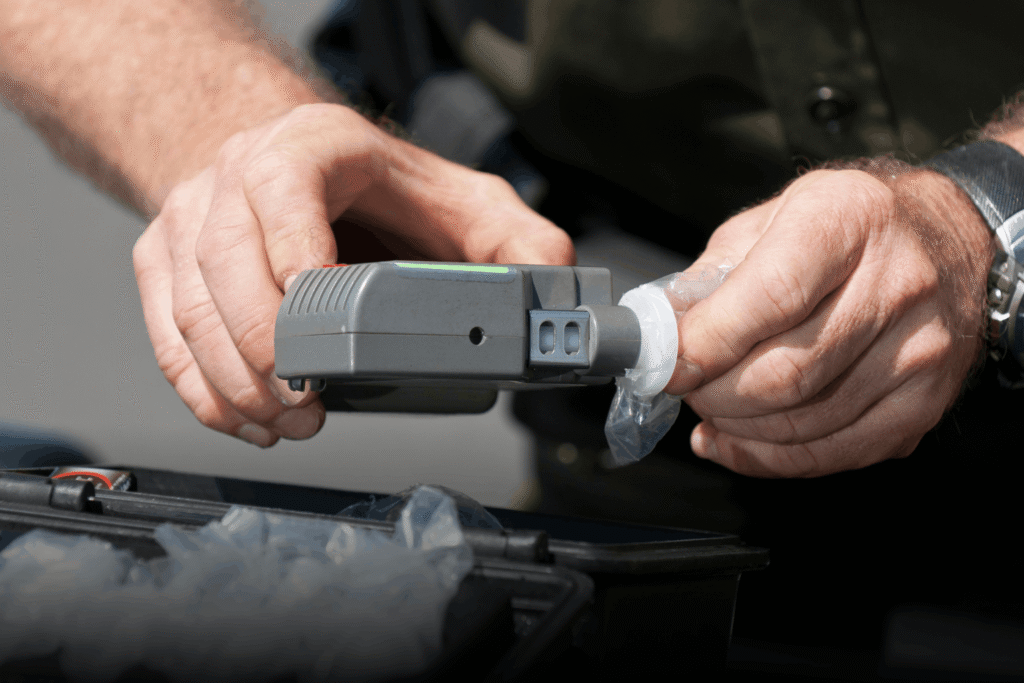
Florida’s implied consent law, Florida Statutes Section 316.1932, establishes that by operating a motor vehicle in Florida, you have impliedly consented to submit to a breath, blood, or urine test if lawfully arrested for DUI. Refusing the test carries its own set of consequences.
- First refusal: Automatic 1-year license suspension (administrative, separate from any criminal DUI penalties).
- Second or subsequent refusal: Automatic 18-month license suspension, and the refusal itself becomes a separate first-degree misdemeanor carrying up to 1 year in jail.
The prosecution can also use your refusal as evidence of consciousness of guilt at trial, arguing to the jury that you refused the test because you knew you would fail. However, the refusal also deprives the prosecution of a specific BAC number, forcing them to prove impairment through circumstantial evidence alone. Whether to submit to or refuse a breath test involves a complex analysis of risks and benefits that varies based on the specific circumstances of each case.
Challenging the Breath Test Results
Florida uses the Intoxilyzer 8000 for evidentiary breath testing. While this instrument is approved by the Florida Department of Law Enforcement, it is not infallible. The Rubin Firm challenges breath test results by examining whether the instrument was properly maintained and inspected according to FDLE regulations, whether the operator was properly certified, whether the 20-minute observation period was actually observed (required to ensure the subject did not belch, regurgitate, or consume anything that could affect the result), whether the testing protocol was followed precisely, and whether the instrument produced consistent results across two separate breath samples.
Mouth alcohol contamination, gastroesophageal reflux disease (GERD), diabetes, certain diets, and recent use of mouthwash or breath spray can all produce falsely elevated BAC readings. Medical conditions and external factors that affect the reliability of breath testing are a critical component of DUI defense, and the Rubin Firm investigates each of these potential issues in every DUI case.
Steps to Take After a DUI Arrest in Stuart
Contact an attorney within 10 days:
The administrative license suspension deadline is absolute. Call (772) 283-2004 immediately.
Write down everything you remember:
The details of the stop, what the officer said, what tests were administered, how you performed, and whether you consented to or refused the breath test.
Do not discuss the case publicly:
Social media posts, text messages, and conversations with friends can all become evidence.
Attend all court dates:
Failure to appear will result in a warrant for your arrest and suspension of your license.
Drug-Related DUI in Florida
Florida’s DUI statute is not limited to alcohol. Driving under the influence of any controlled substance, including prescription medications, marijuana (even with a valid medical card), over-the-counter medications that cause drowsiness, and illegal drugs, is prosecuted under the same statute with the same penalties. The key distinction is that drug-related DUI cases do not involve a simple BAC number. There is no per se legal limit for drug concentration that automatically establishes impairment, which means the prosecution must rely entirely on evidence of impaired driving, officer observations, field sobriety exercise performance, and sometimes blood or urine testing to prove its case.
This reliance on subjective evidence creates significant defense opportunities. The officer’s observations of “impairment” may be contradicted by video footage. Field sobriety exercises may have been improperly administered or scored. Blood or urine test results may show the presence of a substance but cannot reliably establish the level of impairment, particularly for drugs like marijuana where metabolites remain detectable long after any impairing effects have worn off. The Rubin Firm has extensive experience defending drug-related DUI charges and understands the scientific and legal complexities these cases present.
The Long-Term Consequences of a DUI Conviction
Beyond the immediate criminal penalties, a DUI conviction creates lasting consequences that affect virtually every aspect of your life. Your auto insurance rates will increase dramatically, often doubling or tripling for several years. Some insurance companies will drop you entirely, forcing you to obtain expensive high-risk coverage. A DUI conviction appears on background checks conducted by employers, landlords, and professional licensing boards. For individuals in careers that involve driving, such as commercial truck drivers, delivery drivers, and real estate agents who transport clients, a DUI conviction can be career-ending.
Professional consequences extend beyond driving-related careers. Healthcare professionals, attorneys, teachers, financial advisors, and other licensed professionals may face disciplinary proceedings from their licensing boards. A DUI conviction can affect custody and visitation arrangements in family law proceedings, as courts may consider the conviction when evaluating a parent’s judgment and fitness. For non-citizens, a DUI conviction, particularly one involving drugs or resulting in injury, can trigger immigration consequences including deportation and inadmissibility. These collateral consequences underscore why fighting a DUI charge is so important and why the 10-day license deadline should not be the only urgency driving your decision to retain an attorney.
Field Sobriety Exercises: Designed to Fail
The Standardized Field Sobriety Tests used by Florida law enforcement consist of three exercises: the Horizontal Gaze Nystagmus (HGN) test, the Walk-and-Turn test, and the One-Leg Stand test. These exercises are promoted as reliable indicators of impairment, but research shows they are far from perfect. Even under ideal conditions, the three-test battery correctly identifies impairment only about 91% of the time for the HGN test and significantly less for the other two exercises, meaning that sober individuals fail these tests at measurable rates.
Conditions during a roadside DUI investigation are almost never ideal. Exercises are administered on the shoulder of a road, often at night, with traffic passing, emergency lights flashing in the subject’s eyes, and the stress of a police encounter affecting the subject’s composure. Physical conditions including back problems, knee injuries, inner ear disorders, neurological conditions, obesity, and advanced age can all affect performance on balance-based exercises. Footwear, particularly heels or sandals, affects stability. Medications that cause dizziness or drowsiness can mimic signs of alcohol impairment. The Rubin Firm scrutinizes every aspect of the field sobriety testing in your case, from the officer’s training and administration technique to the conditions under which the tests were performed, to challenge the reliability of the results.
We’re Here To Heil You Recover Compensation For:
- Injury or damages
- Injury & Medical
- Injury or damages
Serving Stuart, Martin County, and the Treasure Coast
The Rubin Firm defends individuals facing DUI charges in Stuart, Palm City, Jensen Beach, Hobe Sound, Indiantown, Port St. Lucie, Fort Pierce, Vero Beach, Jupiter, and throughout Martin, St. Lucie, Indian River, and Palm Beach Counties.
Referral Partnerships for DUI Cases
Attorneys who encounter DUI charges in their practice trust The Rubin Firm for experienced defense. Contact us to discuss a referral.
Frequently Asked Questions About DUI Charges in Stuart
What happens to my license after a DUI arrest?
Your physical license is confiscated and you receive a temporary permit valid for 10 days. You must request a formal review hearing with the DHSMV within those 10 days to challenge the suspension and obtain an extended temporary permit. Missing this deadline results in automatic suspension.
Should I refuse the breath test?
This is a complex decision with significant consequences either way. Refusal results in an automatic license suspension and can be used as evidence at trial. Submitting provides the prosecution with a BAC number. The right choice depends on your specific circumstances, and consulting an attorney helps you understand the implications.
Can a first-time DUI be dismissed?
Yes. DUI charges can be challenged on multiple grounds including illegal traffic stops, improper breath test procedures, unreliable field sobriety testing, and insufficient evidence of impairment. Diversion programs may also be available in certain jurisdictions for first-time offenders.
What is the penalty for a first DUI in Florida?
A first DUI carries up to 6 months in jail, fines of $500 to $1,000 (higher with aggravating factors), license suspension of 180 days to 1 year, probation, 50 hours of community service, DUI school, and vehicle impoundment.
Is DUI a felony in Florida?
A third DUI within 10 years and a fourth DUI regardless of timing are felonies. DUI causing serious bodily injury and DUI manslaughter are also felonies with substantial prison sentences.
$150 Million
Arrested for DUI? You Have 10 Days to Protect Your License.
A DUI arrest triggers urgent deadlines and serious consequences. The Stuart DUI defense lawyers at The Rubin Firm fight both the criminal case and the administrative license proceedings to protect your freedom and your ability to drive.
Call (772) 283-2004 now. Complete our contact form or chat live. Do not wait.
 4.9 Rating on