

The charge is serious on its own, carrying up to 15 years in prison as a second-degree felony. But when the prosecution can prove that you were in actual physical possession of the firearm, rather than constructive possession, the stakes increase dramatically: a three-year mandatory minimum prison sentence applies, and the judge has no power to impose a shorter term. For individuals whose prior felony was an enumerated violent offense or who have gang-related enhancements, the charge can be elevated to a first-degree felony with even greater sentencing exposure. The distinction between actual and constructive possession, the legality of the search that produced the firearm, and whether your civil rights and firearm authority have been restored are all critical issues that can determine the outcome. A Stuart felon in possession lawyer at The Rubin Firm challenges every element of these charges in Martin County, fighting to suppress unlawfully obtained evidence, defeat the possession allegation, and protect our clients from mandatory prison sentences.
These charges carry mandatory prison time. Call The Rubin Firm at (772) 283-2004, complete our contact form, or start a live chat immediately.
The Elements of Felon in Possession Under Florida Law
Under Florida Statutes Section 790.23, the prosecution must prove two elements beyond a reasonable doubt: first, that the defendant has previously been convicted of a felony, and second, that the defendant knowingly owned, possessed, or had in their care, custody, or control a firearm, ammunition, or electric weapon or device. The statute applies to felony convictions in Florida state court, federal court, and the courts of any other state, territory, or country where the offense was punishable by imprisonment exceeding one year. It also applies to certain juvenile adjudications for acts that would be felonies if committed by an adult, when the person is under 24 years of age.
The prior felony element is typically straightforward for the prosecution to prove through certified court records. The possession element is where most felon-in-possession cases are won or lost by the defense, because possession can mean very different things depending on the circumstances.
Actual Possession vs. Constructive Possession

This distinction is the most consequential issue in most felon-in-possession cases, because it determines not just whether a conviction is possible but what mandatory minimum sentence applies.
Actual possession means the firearm was on the defendant’s person or so close as to be within ready reach and under the defendant’s control. A gun in your waistband, in your hand, in your pocket, in a bag you are carrying, or under the seat you are sitting on may all constitute actual possession. When the prosecution proves actual possession, a three-year mandatory minimum prison sentence applies under Florida’s 10-20-Life law.
Constructive possession means the firearm was in a place over which the defendant had control or in which the defendant had concealed it, even though the firearm was not on the defendant’s person. A gun found in a closet of the defendant’s home, in the trunk of the defendant’s car, or in a desk drawer at the defendant’s workplace may constitute constructive possession. Crucially, constructive possession requires the prosecution to prove both that the defendant knew the firearm was there and that the defendant had the ability to exercise dominion and control over it. When only constructive possession is proven, the three-year mandatory minimum does not apply, and the sentencing range is up to 15 years with no mandatory minimum.
The difference between a three-year mandatory minimum and a sentence within the judge’s discretion is enormous. For defendants with minimal criminal histories and strong mitigating factors, the absence of a mandatory minimum means the possibility of probation, a shorter prison sentence, or other alternatives that are completely unavailable when actual possession triggers the mandatory term. The Rubin Firm fights aggressively to challenge the prosecution’s classification of possession as actual rather than constructive, because that distinction can change the trajectory of the case.
injured? Let Us Help You Get Justice. Free consultation. No fees unless we win your case.
Defense Strategies in Felon-in-Possession Cases
Illegal search and seizure
The firearm was found through a search. If that search was unconstitutional, the evidence must be suppressed. We examine every traffic stop, consent encounter, warrant execution, probation search, and investigative detention for Fourth Amendment violations.
Challenging knowledge
In constructive possession cases, the prosecution must prove you knew the firearm was present. If the gun belonged to another person, was left in a shared space without your knowledge, or was placed there by someone else, the knowledge element may fail.
Challenging control
Even if you knew a firearm was in your home or vehicle, the prosecution must prove you had the ability to exercise control over it. In shared residences and shared vehicles, multiple people may have equal access to the same space, and the prosecution’s burden to prove which person had control is significant.
Restored civil rights
If your civil rights and firearm authority have been restored through the Florida clemency process, you are exempt from Section 790.23. We verify whether any prior restoration of rights applies to your situation.
Expunged conviction
Antique firearm exception
Florida law exempts antique firearms, defined as firearms manufactured in or before 1918 or replicas thereof, from the definition of firearm under Section 790.23, provided the antique firearm is not used in the commission of a crime.
Penalties for Felon in Possession

Federal charges:
Federal prosecution under 18 U.S.C. Section 922(g) carries up to 10 years, or up to 15 years under the Armed Career Criminal Act if the defendant has three or more prior violent felonies or serious drug offenses.
Constructive possession:
Second-degree felony, up to 15 years in prison, up to $10,000 fine. No mandatory minimum.
Actual possession:
Second-degree felony, up to 15 years in prison, up to $10,000 fine, with a three-year mandatory minimum prison sentence under the 10-20-Life law.
Gang enhancement:
If the defendant has prior gang-related convictions or the offense is gang-related, the charge is elevated to a first-degree felony punishable by up to 30 years in prison.
Ammunition possession:
Possession of ammunition by a convicted felon is also a second-degree felony carrying up to 15 years, but without the three-year mandatory minimum that applies to actual possession of a firearm.
Federal vs. State Prosecution
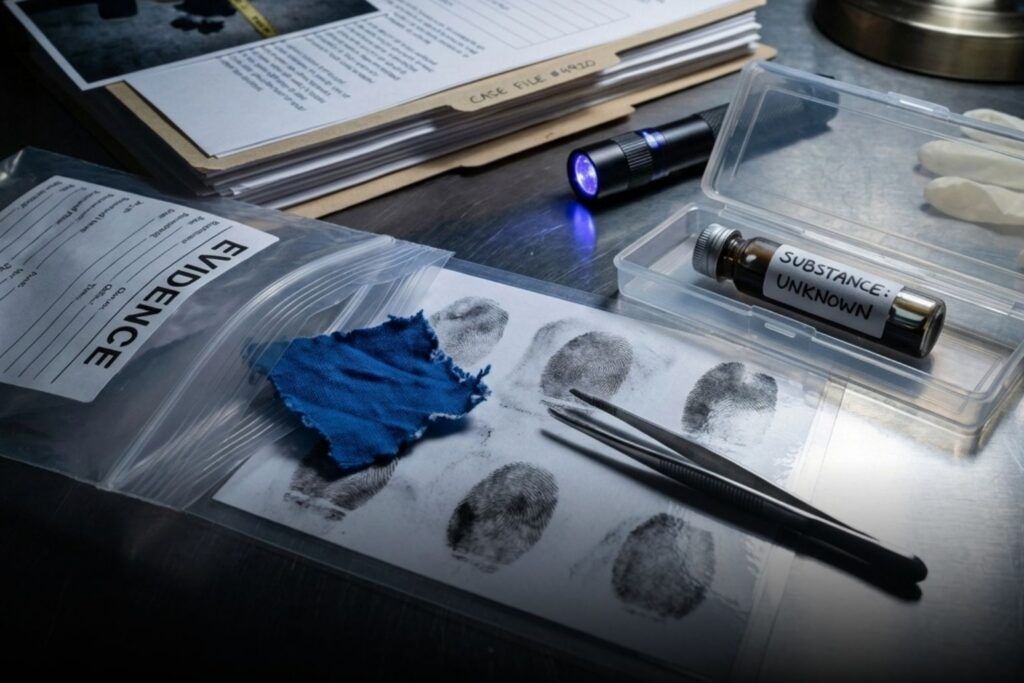
Felon-in-possession charges can be prosecuted under either Florida state law or federal law, and the consequences differ in important ways. Federal prosecution under 18 U.S.C. Section 922(g) is particularly concerning because the federal system does not offer parole, defendants serve at least 85% of their sentence, and the Armed Career Criminal Act can impose a 15-year mandatory minimum for defendants with qualifying prior convictions. Federal prosecutors may take cases that involve prior violent felony convictions, cases connected to drug trafficking investigations, or cases where the defendant is a target of a broader federal investigation.
The decision to prosecute federally vs. at the state level is made by the respective prosecutors, and in some cases, a defendant may face charges in both systems for the same conduct. Understanding which system is prosecuting your case and the specific consequences in that system is essential for developing the right defense strategy. The Rubin Firm defends felon-in-possession charges in both Florida state court and the United States District Court for the Southern District of Florida.
How Felon-in-Possession Charges Typically Arise
Felon-in-possession charges rarely arise in isolation. They are almost always the product of a law enforcement encounter that began for another reason. Traffic stops are the most common origin. Officers stop a vehicle for a traffic violation, develop a basis to search, and discover a firearm in the vehicle occupied by a person with a prior felony. Probation and community control searches are another frequent source, as individuals on supervision may be subject to warrantless searches of their person, vehicle, and home. Domestic violence calls produce felon-in-possession charges when officers responding to the scene discover firearms in a home occupied by a person with a felony record. And drug investigations that produce search warrants frequently turn up firearms alongside controlled substances, adding felon-in-possession charges to an already serious case.
Each of these scenarios presents different constitutional issues and different defense opportunities. The traffic stop may have lacked reasonable suspicion. The probation search may have exceeded its lawful scope. The domestic violence response may have involved an unlawful entry. The search warrant may have been based on stale or inaccurate information. The Rubin Firm examines the origin of every felon-in-possession charge to identify the constitutional vulnerabilities that can lead to suppression of the evidence and dismissal of the case.
Steps to Take After a Felon-in-Possession Arrest
Say nothing about the firearm:
Do not explain why you had the weapon, where you got it, who it belongs to, or whether you knew it was there. Remain silent.
Do not consent to searches:
If police ask permission to search, refuse. Your refusal cannot be held against you.
Contact The Rubin Firm immediately:
Mandatory minimum sentences make early, aggressive defense essential. Call (772) 283-2004.
The Intersection of Felon-in-Possession and Other Criminal Charges
Felon-in-possession charges rarely exist in isolation. When a firearm is discovered during a drug investigation, the defendant typically faces both the drug charges and the felon-in-possession charge, and if the firearm was in close proximity to the drugs, the prosecution may argue that the weapon was used in furtherance of the drug offense, triggering additional sentencing enhancements. When a firearm is discovered during a domestic violence arrest, the felon-in-possession charge compounds an already serious situation. When a probation search produces a weapon, the defendant faces the felon-in-possession charge plus a violation of probation on the underlying offense, creating dual legal exposure that can result in consecutive sentences.
This layering of charges creates a compound sentencing exposure that can be devastating. A defendant who faces a drug trafficking charge with a 3-year mandatory minimum, a felon-in-possession charge with a separate 3-year mandatory minimum, and a probation violation on a prior offense could be looking at a decade or more in prison across the combined cases. The defense strategy must address each charge individually while also considering how they interact, because a successful motion to suppress the firearm may also eliminate the drug evidence if both were discovered in the same search, while a constitutional challenge to the traffic stop that initiated the encounter may result in suppression of everything that followed.
Ammunition Possession and Electric Weapons
Florida Statutes Section 790.23 prohibits convicted felons from possessing not only firearms but also ammunition and electric weapons or devices. This means that a convicted felon who possesses a single bullet, even without a firearm, can be charged with a second-degree felony carrying up to 15 years in prison. Similarly, possession of a taser or stun gun by a convicted felon violates the statute. These provisions catch some defendants off guard because they may not realize that the prohibition extends beyond firearms to include ammunition and electric devices.
The ammunition prohibition is particularly consequential for defendants who live in households where other family members lawfully own firearms and keep ammunition in the home. A convicted felon who lives with a spouse or partner who legally possesses firearms and ammunition may face charges if law enforcement discovers the ammunition during a search, even if the ammunition belongs to the other person. The constructive possession defense is critical in these situations: the prosecution must prove that the defendant knew the ammunition was present and had the ability to exercise control over it, and the defense can present evidence that the ammunition belonged to another household member and was stored in that person’s exclusive area of the home.
The important practical distinction between ammunition possession and firearm possession is that the three-year mandatory minimum under 10-20-Life applies only to actual possession of a firearm, not to possession of ammunition alone. While ammunition possession is still a serious second-degree felony, the absence of the mandatory minimum gives the judge significantly more sentencing flexibility, including the possibility of probation in appropriate cases. The Rubin Firm uses this distinction strategically in cases where the prosecution is attempting to argue that ammunition possession should carry the same weight as firearm possession.
We’re Here To Heil You Recover Compensation For:
- Injury or damages
- Injury & Medical
- Injury or damages
Serving Stuart, Martin County, and the Treasure Coast
The Rubin Firm defends individuals facing felon-in-possession charges in Stuart, Palm City, Jensen Beach, Hobe Sound, Indiantown, Port St. Lucie, Fort Pierce, Vero Beach, Jupiter, and throughout Martin, St. Lucie, Indian River, and Palm Beach Counties.
Referral Partnerships for Felon-in-Possession Cases
Attorneys across the Treasure Coast trust The Rubin Firm for felon-in-possession defense referrals. Contact us to discuss a referral.
Frequently Asked Questions About Felon in Possession in Stuart
What is the mandatory minimum for felon in possession?
If the prosecution proves actual possession (the firearm was on your person or within ready reach), the mandatory minimum is 3 years in prison under Florida’s 10-20-Life law. If only constructive possession is proven, there is no mandatory minimum, and the judge has discretion within the 0-to-15-year sentencing range.
What is the difference between actual and constructive possession?
Actual possession means the firearm was on your person or within your immediate reach and control. Constructive possession means the firearm was in a location you controlled or had access to. Constructive possession requires proof that you knew the firearm was present and could exercise control over it. The distinction determines whether the 3-year mandatory minimum applies.
Can I ever legally possess a firearm after a felony conviction?
Only if your civil rights and firearm authority have been specifically restored through the Florida clemency process, or if your felony conviction has been expunged. A general restoration of civil rights does not automatically restore firearm rights. An 8-year waiting period typically applies before you can apply for firearm authority restoration.
Does possession of ammunition also carry a mandatory minimum?
No. Possession of ammunition by a convicted felon is a second-degree felony carrying up to 15 years, but the 3-year mandatory minimum under 10-20-Life applies only to actual possession of a firearm, not ammunition alone.
Can a felon possess an antique firearm?
Yes. Florida law exempts antique firearms, defined as firearms manufactured in or before 1918 or replicas thereof, from the prohibited possession statute, provided the antique firearm is not used in the commission of a crime. However, not all firearms that appear old qualify as antique under the statutory definition, so verification is essential.
$150 Million
Facing Felon-in-Possession Charges? The Possession Type Determines Your Future.
The difference between actual and constructive possession can mean the difference between a mandatory prison sentence and judicial discretion. The Stuart felon-in-possession lawyers at The Rubin Firm challenge the evidence, the search, and the prosecution’s characterization of possession to protect your freedom.
Call (772) 283-2004 for a confidential consultation. Complete our contact form or chat live.
 4.9 Rating on