
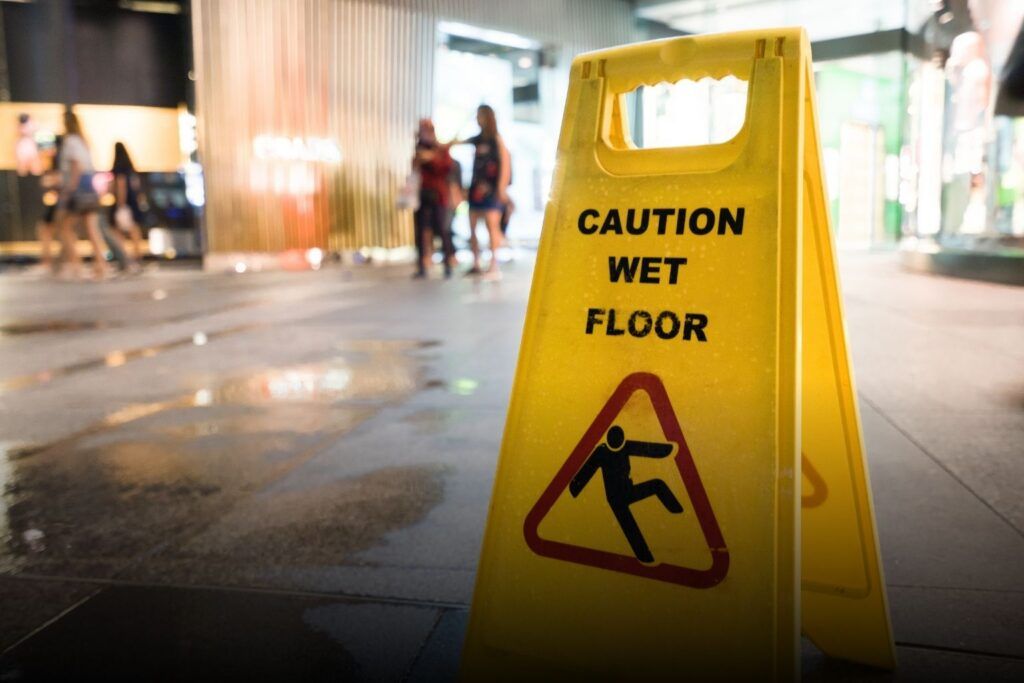
When they fail, and someone slips on a wet floor, trips over a broken walkway, falls through an unguarded opening, is struck by a falling object, drowns in an unfenced pool, or is harmed by any other dangerous condition that the owner knew or should have known about, the law holds that property owner accountable. Premises liability is the legal framework that makes this accountability possible. A Stuart premises liability lawyer at The Rubin Firm investigates dangerous property conditions, identifies every responsible party, and fights for the full compensation that injured victims in Martin County deserve.
Whether your injury happened in a store, a restaurant, a hotel, an apartment complex, a parking lot, or a private residence, the attorneys at The Rubin Firm can evaluate your claim. Call (772) 283-2004, fill out our contact form, or start a live chat.
Understanding Premises Liability in Florida
Florida premises liability law is rooted in the concept that property owners owe a duty of care to people who enter their property. The specific duty depends on the visitor’s legal status. Business invitees, people who enter a property for a purpose related to the owner’s business, such as customers, clients, and delivery personnel, are owed the highest duty of care. The owner must maintain the property in a reasonably safe condition and must warn of or correct dangerous conditions that the owner knows about or should discover through reasonable inspection.
Under Florida Statutes Section 768.0755, a person who slips and falls on a transitory substance in a business establishment must prove that the business had actual or constructive knowledge of the dangerous condition. Constructive knowledge can be demonstrated by showing that the hazardous condition existed for a length of time such that the business should have discovered it through the exercise of ordinary care, or that the condition occurred with such regularity that it was foreseeable.
This legal standard creates a meaningful hurdle for premises liability claimants, which is precisely why evidence collection in the immediate aftermath of an injury is so critical. Surveillance footage that shows how long a spill sat on the floor before you fell, maintenance logs that reveal gaps in inspection schedules, and prior incident reports that document a pattern of similar hazards can all establish the constructive knowledge that the statute requires.
Why The Rubin Firm for Premises Liability Cases
Premises liability cases are aggressively defended by property owners and their insurance companies. The defense playbook is predictable: blame the victim for not watching where they were going, argue the hazard was open and obvious, claim the condition existed for too short a time for the owner to have discovered it, or contend that the victim was not a lawful visitor. These defenses are designed to shift responsibility away from the property owner and onto the injured person.
At The Rubin Firm, we gather evidence before it can disappear. Surveillance footage in most commercial establishments is recorded on a loop that overwrites within days or weeks. Maintenance logs may be altered after an incident. Employees who witnessed the hazard may change their stories under pressure from management. We send preservation demands immediately, conduct prompt investigations, and document the conditions that caused the injury while the evidence is still fresh.
Rapid evidence preservation:
Expert witnesses:
Insurance negotiation:
Trial preparation:
Contingency fee:
You pay nothing unless we recover compensation for you.
injured? Let Us Help You Get Justice. Free consultation. No fees unless we win your case.
Types of Premises Liability Accidents in Stuart

Premises liability encompasses a broad range of dangerous conditions and accident types. While slip and fall accidents are the most commonly recognized form of premises liability, the category extends far beyond wet floors.
Slip and fall accidents:
Trip and fall accidents:
Swimming pool accidents:
Falling objects:
Structural defects:
Inadequate lighting:
InaToxic exposures:dequate lighting:
Elevator and escalator accidents:
Proving Your Premises Liability Claim
Every premises liability case requires proof of four elements. First, the property owner owed you a duty of care based on your status as a lawful visitor. Second, a dangerous condition existed on the property. Third, the owner knew or should have known about the condition and failed to correct it or warn you. Fourth, the dangerous condition caused your injury and resulting damages.
The knowledge element is where most premises liability cases are won or lost. Property owners rarely admit they knew about a hazard. That means the evidence must speak for them. Surveillance video that shows a spill on the floor for twenty minutes before someone falls. Maintenance logs that reveal inspections were supposed to happen hourly but the last documented check was four hours ago. Prior incident reports showing three other people fell at the same location in the past year. Customer complaint records describing the same hazard. Each of these pieces of evidence can establish constructive knowledge and overcome the defense’s argument that the owner was unaware of the danger.
Florida’s comparative negligence system under Florida Statutes Section 768.81 also plays a role. Even if you share some fault for the accident, you can still recover compensation reduced by your percentage of responsibility. Insurance companies aggressively argue comparative fault in premises cases, claiming the victim was distracted, wearing inappropriate footwear, or should have noticed the hazard. An experienced attorney counters these arguments with evidence.
Proving Your Premises Liability Claim
Every premises liability case requires proof of four elements. First, the property owner owed you a duty of care based on your status as a lawful visitor. Second, a dangerous condition existed on the property. Third, the owner knew or should have known about the condition and failed to correct it or warn you. Fourth, the dangerous condition caused your injury and resulting damages.
The knowledge element is where most premises liability cases are won or lost. Property owners rarely admit they knew about a hazard. That means the evidence must speak for them. Surveillance video that shows a spill on the floor for twenty minutes before someone falls. Maintenance logs that reveal inspections were supposed to happen hourly but the last documented check was four hours ago. Prior incident reports showing three other people fell at the same location in the past year. Customer complaint records describing the same hazard. Each of these pieces of evidence can establish constructive knowledge and overcome the defense’s argument that the owner was unaware of the danger.
Florida’s comparative negligence system under Florida Statutes Section 768.81 also plays a role. Even if you share some fault for the accident, you can still recover compensation reduced by your percentage of responsibility. Insurance companies aggressively argue comparative fault in premises cases, claiming the victim was distracted, wearing inappropriate footwear, or should have noticed the hazard. An experienced attorney counters these arguments with evidence.
Compensation for Premises Liability Victims in Stuart
The damages available in a premises liability case depend on the severity of your injuries and the circumstances of the accident. A premises liability attorney in Stuart at The Rubin Firm evaluates every category of compensation.
Medical expenses:
Emergency treatment, hospitalization, surgery, physical therapy, rehabilitation, and future medical needs.
Lost wages:
Pain and suffering:
Disability and impairment:
Wrongful death:
When a premises liability accident is fatal, surviving family members may pursue wrongful death damages.
What to Do After an Injury on Someone's Property
Preserve your clothing and shoes
What you were wearing and what shoes you had on may become relevant evidence.
Report the incident:
Notify the property owner, manager, or staff immediately and insist that a written incident report is created. Get a copy if possible.
Seek medical attention:
Get examined promptly. Delayed treatment gives the defense ammunition to argue your injuries are not serious.
Do not give recorded statements:
Speak with an attorney before discussing the incident with the property owner’s insurance company.
Contact The Rubin Firm:
We act quickly to preserve surveillance footage and other evidence that disappears rapidly. Call (772) 283-2004.
Collect witness information:
Get names and contact details from anyone who saw the accident or who observed the hazardous condition.
Common Locations for Premises Liability Claims in Martin County
Stuart and Martin County see premises liability incidents across a wide variety of property types. Grocery stores and supermarkets are among the most frequent settings for slip and fall claims, where produce displays, refrigerated cases, and beverage aisles create constant opportunities for spills that go unaddressed. Restaurants and fast food establishments produce similar hazards from food preparation, drink service, and restroom areas that are not maintained on a regular cleaning schedule.
Hotels and resorts along the Treasure Coast face premises liability exposure from pool areas, lobby floors, stairwells, parking lots, and room conditions. The seasonal influx of tourists and snowbirds means that many visitors are unfamiliar with the property layout and are more susceptible to tripping hazards, uneven walkways, and other conditions that regular visitors might anticipate. Apartment complexes and condominiums generate claims from common areas, including shared laundry rooms, hallways, parking lots, recreational facilities, and exterior walkways where management is responsible for maintenance and safety.
Retail shopping centers, big box stores, and home improvement warehouses present unique hazards because of the volume of merchandise being moved, stocked, and displayed throughout the day. Merchandise falling from shelves, pallets left in aisles, forklift operations in customer-accessible areas, and improperly anchored display fixtures all create conditions that injure shoppers. Construction zones within stores undergoing renovation add further risk when barriers are inadequate and customers are directed through areas with exposed flooring, uneven surfaces, or overhead work.
Public parks, recreational facilities, and community spaces in Martin County also give rise to premises liability claims when municipalities or homeowners’ associations fail to maintain playground equipment, athletic courts, walking trails, and parking areas in safe condition. These claims against government entities are subject to the sovereign immunity provisions discussed above, which add procedural complexity and make prompt legal consultation even more important.
The Statute of Limitations for Premises Liability Claims
Time is a critical factor in every premises liability case, and it works against you in two ways. First, the formal statute of limitations gives you two years from the date of your injury to file a personal injury lawsuit. Missing that deadline bars your claim permanently. Claims against government entities are subject to even shorter notice deadlines that must be met well before the general limitations period expires.
Second, and often more practically significant, is the rapid disappearance of evidence. Surveillance cameras in most commercial establishments record on loops that overwrite within days. Maintenance logs and incident reports may be incomplete or altered after the fact. Employees who witnessed the hazardous condition may be transferred, terminated, or coached on what to say. The physical condition of the property itself changes as the hazard is cleaned up, repaired, or modified after the accident. Every day that passes without an attorney sending preservation demands and documenting conditions is a day that critical evidence may be lost forever. The Rubin Firm acts quickly because we understand that the first hours and days after a premises liability incident are the most important for evidence preservation.
We’re Here To Heil You Recover Compensation For:
- Injury or damages
- Injury & Medical
- Injury or damages
Serving Premises Liability Victims Across the Treasure Coast
The Rubin Firm represents premises liability victims in Stuart, Palm City, Jensen Beach, Hobe Sound, Indiantown, Port St. Lucie, Fort Pierce, Vero Beach, Jupiter, and throughout Martin, St. Lucie, Indian River, and Palm Beach Counties.
Referral Partnerships for Premises Liability Cases
Attorneys throughout the Treasure Coast trust The Rubin Firm as a referral partner for complex premises liability cases. Contact us to discuss a referral.
Frequently Asked Questions About Premises Liability in Stuart
What is premises liability?
Premises liability is the legal principle that holds property owners responsible for injuries caused by dangerous conditions on their property when the owner knew or should have known about the hazard and failed to correct it or warn visitors.
What do I need to prove?
You must prove that a dangerous condition existed, the property owner had actual or constructive knowledge of it, the owner failed to fix the condition or warn visitors, and the condition caused your injury.
Can I sue a government entity for a dangerous property condition?
Yes, but claims against government properties are subject to mandatory pre-suit notice requirements, specific procedural rules, and potential damage caps under Florida’s sovereign immunity statute. Consulting an attorney immediately is essential.
What if the property owner says I should have seen the hazard?
The defense will argue comparative negligence, claiming you should have noticed and avoided the dangerous condition. Even if you share some fault, you can still recover compensation under Florida law, reduced by your percentage of responsibility. An experienced attorney counters these arguments with evidence showing the property owner’s failure to maintain safe conditions.
How long do I have to file a premises liability claim?
Under Florida Statutes Section 95.11, the general statute of limitations is two years from the date of injury. Claims against government entities have shorter notice deadlines that must be met before the limitations period expires.
$150 Million
Injured on Someone's Property? Hold the Owner Accountable.
Property owners who fail to maintain safe conditions must answer for the harm they cause. The Stuart premises liability lawyers at The Rubin Firm fight to ensure negligent property owners pay the full cost of the injuries their negligence produces.
Call (772) 283-2004 for a free consultation. Complete our contact form or chat live. No fee unless we win.
 4.9 Rating on