
A conviction for drug possession, distribution, manufacturing, or trafficking can result in years or even decades behind bars, fines reaching hundreds of thousands of dollars, a permanent criminal record that follows you for the rest of your life, and an automatic two-year suspension of your driver’s license. But an arrest is not a conviction, and the prosecution still has to prove its case beyond a reasonable doubt. A Stuart drug crime lawyer at The Rubin Firm defends individuals facing drug charges in Martin County by challenging the legality of searches and seizures, questioning the chain of custody of evidence, disputing constructive possession arguments, negotiating for reduced charges or diversion programs, and taking cases to trial when the evidence supports a not guilty verdict.
Your rights are on the line, and time matters. Call The Rubin Firm at (772) 283-2004, fill out our contact form, or start a live chat. Every consultation is confidential.
How Florida Classifies Drug Offenses
Florida’s drug laws are primarily codified in Florida Statutes Chapter 893, which defines controlled substances, organizes them into five schedules based on their potential for abuse and accepted medical use, and establishes the penalties for various drug-related offenses. The schedule classification of the substance involved, combined with the quantity possessed and the nature of the alleged offense, determines whether you face a misdemeanor or felony charge and what range of penalties applies.
Schedule I substances, which include heroin, MDMA, and LSD, are classified as having a high potential for abuse and no currently accepted medical use. Schedule II substances include cocaine, methamphetamine, fentanyl, and oxycodone. Schedule III through V substances have progressively lower abuse potential and include certain prescription medications. Marijuana occupies a unique position in Florida law: while medical marijuana is legal for qualified patients, recreational possession remains criminal, and possession of 20 grams or more is a felony.
The type of offense matters enormously. Florida distinguishes between simple possession for personal use, possession with intent to sell or distribute, sale or delivery of a controlled substance, manufacturing or cultivation, and trafficking, which is triggered by possessing quantities above specified weight thresholds regardless of whether you intended to sell. Each category carries different penalties, and the jump from one category to the next can mean the difference between probation and a mandatory decade in prison.
Why The Rubin Firm Fights Drug Charges Aggressively
Drug cases are built on evidence, and evidence can be challenged. Every drug case begins with a question: how did law enforcement discover the drugs? The answer determines whether the evidence can be used against you in court. The Fourth Amendment to the United States Constitution protects you from unreasonable searches and seizures, and when police violate your constitutional rights to obtain drug evidence, a skilled defense attorney can move to suppress that evidence, potentially resulting in the charges being dismissed entirely.
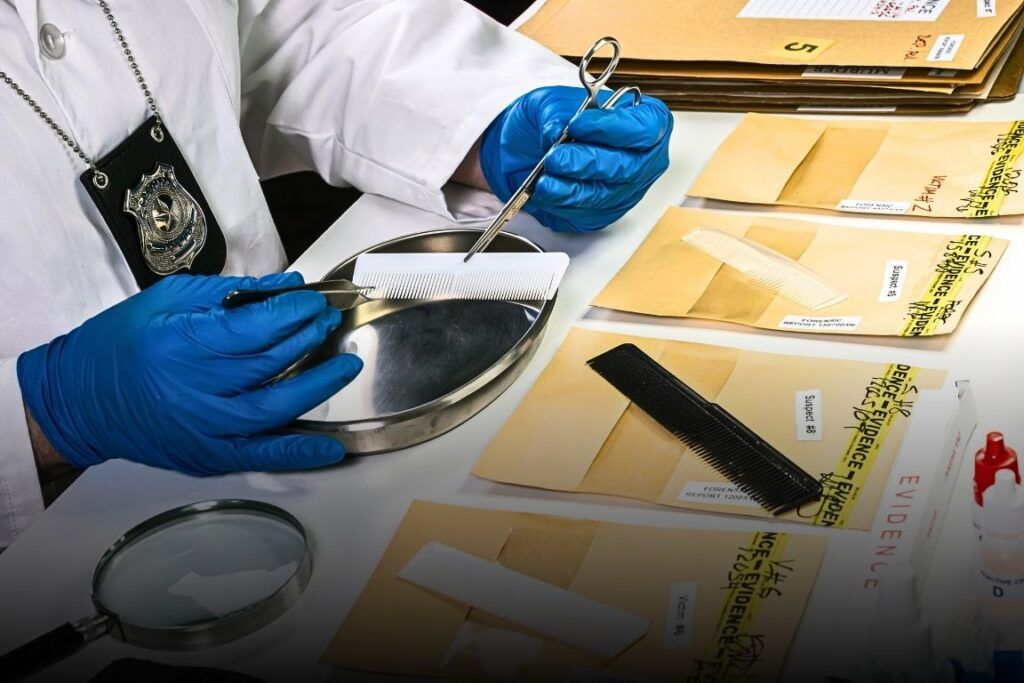
At The Rubin Firm, we examine every aspect of how evidence in your case was obtained. We scrutinize the initial traffic stop or law enforcement encounter to determine whether police had reasonable suspicion or probable cause. We analyze whether consent to search was truly voluntary or was coerced through intimidation or deception. We review search warrants for legal sufficiency and factual accuracy. We challenge the chain of custody from seizure through laboratory testing. And we question whether the prosecution can prove you knowingly possessed the substance, particularly in constructive possession cases where drugs were found in a shared vehicle, residence, or space.
Fourth Amendment challenges
We file motions to suppress evidence obtained through illegal traffic stops, warrantless searches, and unconstitutional seizures.
Constructive possession defense
When drugs are found in a shared space, the prosecution must prove you knew they were there and had the ability to control them. Proximity alone is not enough.
Chain of custody challenges
We examine whether the substance was properly handled, stored, tested, and documented from seizure through lab analysis.
Diversion and drug court advocacy
For eligible clients, we negotiate entry into drug court or pre-trial diversion programs that can result in charges being dropped upon successful completion.
Confidential representation
We protect your privacy and fight to minimize collateral consequences on employment, education, housing, and personal life.
injured? Let Us Help You Get Justice. Free consultation. No fees unless we win your case.
Types of Drug Charges in Martin County
Drug Possession
Simple possession of a controlled substance for personal use is charged as a third-degree felony for most substances, carrying up to five years in prison and a $5,000 fine. Possession of less than 20 grams of marijuana is a first-degree misdemeanor under Florida Statutes Section 893.13, with up to one year in jail and a $1,000 fine. All drug convictions trigger an automatic two-year driver’s license suspension.
Drug Trafficking
Trafficking charges in Florida are triggered by the weight of the controlled substance, not by evidence of sale or distribution. Possessing amounts above the statutory threshold results in trafficking charges carrying mandatory minimum prison sentences ranging from 3 years to 25 years or more, with fines up to $500,000. Judges have no discretion to impose lighter sentences upon conviction.
Sale, Delivery, and Distribution
Manufacturing and Cultivation
Drug Paraphernalia
Possession of drug paraphernalia is a first-degree misdemeanor. Selling paraphernalia is a third-degree felony. Selling to a minor is a second-degree felony. While less severe than possession charges, paraphernalia convictions create a drug-related criminal record with lasting collateral consequences.
Penalties for Drug Convictions in Florida

Collateral consequences:
Employment barriers, housing difficulties, loss of educational financial aid, professional licensing problems, immigration consequences, and loss of firearm rights.
Florida’s drug penalties escalate rapidly based on substance, quantity, and offense type. Mandatory minimum sentencing laws remove judicial discretion for certain offenses, guaranteeing specific prison terms upon conviction.
Misdemeanor possession (under 20g marijuana):
Up to 1 year in jail, $1,000 fine, 2-year license suspension.
Third-degree felony possession:
Up to 5 years in prison, $5,000 fine, 2-year license suspension.
Second-degree felony (sale/delivery):
Up to 15 years in prison, $10,000 fine.
First-degree felony (trafficking):
Up to 30 years in prison, fines up to $500,000, mandatory minimums of 3 to 25 years.
Defense Strategies That Work in Florida Drug Cases
Every drug case has potential vulnerabilities that a skilled defense attorney can identify and exploit. The most effective strategy depends on the specific facts of your situation.
Illegal search and seizure
Evidence found through unconstitutional searches may be suppressed, potentially resulting in dismissed charges.
Lack of knowledge
The prosecution must prove you knew drugs were present. In shared spaces, mere proximity is insufficient.
Entrapment
If law enforcement induced you to commit a drug offense you would not otherwise have committed, entrapment is a valid defense.
Crime lab challenges
Errors in substance testing, chain of custody failures, and lab procedural violations can undermine the prosecution’s evidence.
Substantial assistance
Florida law allows defendants who provide substantial assistance to law enforcement to receive sentences below mandatory minimums.
Drug court and diversion
Eligible defendants may complete treatment-focused programs that result in charges being dismissed.
Drug Court and Diversion Programs in Martin County
Not every drug case needs to end in a conviction. Florida offers drug court and pre-trial diversion programs designed to address substance abuse through treatment rather than punishment. These programs are typically available to first-time offenders and individuals whose charges stem from addiction rather than commercial drug activity.
Drug court participants attend regular court hearings, complete substance abuse treatment, submit to random drug testing, maintain employment or pursue education, and comply with other court-set conditions. Successful completion results in criminal charges being dismissed. In some cases, the arrest record may become eligible for expungement. The Rubin Firm advocates aggressively for eligible clients to gain admission to these programs, because the outcome is dramatically better than a criminal conviction on every measure.
The Collateral Consequences of a Drug Conviction
Criminal penalties are only part of the picture. A drug conviction creates collateral consequences that can affect virtually every aspect of your life for years or decades after you have served your sentence. Employers routinely screen for drug convictions on background checks. Landlords reject applicants with drug records. Professional licensing boards may deny or revoke licenses. Colleges and universities may deny financial aid. Immigration consequences can include deportation for non-citizens. And a drug conviction permanently strips your right to possess firearms under both state and federal law.
These collateral consequences are why fighting a drug charge, even a seemingly minor one, is so important. A misdemeanor marijuana conviction might seem like a small matter in the moment, but the two-year license suspension, the criminal record, and the employment barriers that follow can reshape the trajectory of your life. The Rubin Firm understands these stakes, and we fight every case with the full awareness of what our clients stand to lose.
Steps to Take After a Drug Arrest in Stuart
Exercise your right to remain silent:
Do not answer questions about drugs, their origin, or their ownership. Anything you say will be used against you.
Do not consent to searches:
If police ask permission to search your vehicle, home, or person, you have the right to refuse. Politely decline.
Do not discuss the case with anyone:
Do not talk about charges with friends, family, cellmates, or anyone except your attorney.
Contact The Rubin Firm immediately:
The sooner an attorney examines the legality of the search and the strength of the prosecution’s case, the better your defense will be. Call (772) 283-2004.
Federal Drug Charges vs. State Drug Charges
Drug offenses can be prosecuted under either Florida state law or federal law, and in some cases both. Federal drug charges typically arise when the alleged offense crosses state lines, involves large quantities associated with interstate distribution networks, takes place on federal property, or is investigated by federal agencies such as the Drug Enforcement Administration, the FBI, or Homeland Security Investigations. Federal drug penalties are often more severe than their state counterparts, and federal sentencing guidelines create a structured framework that produces longer prison sentences with less opportunity for early release.
The federal prison system does not offer parole. Defendants convicted of federal drug crimes serve at least 85% of their sentence, and for offenses carrying mandatory minimums, there is no judicial discretion to impose a shorter term. Federal conspiracy charges can also sweep in individuals who played minor roles in a drug operation, exposing them to the same mandatory minimums as the principal organizers. If you are facing federal drug charges in the Southern District of Florida or any other federal jurisdiction, having an attorney experienced in federal criminal defense is essential.
How Drug Charges Affect Your Future Beyond the Courtroom
The courtroom consequences of a drug conviction are only the beginning. What happens after you complete your sentence, pay your fines, and finish your probation can be just as devastating. A drug conviction on your record shows up on every background check an employer runs. In a competitive job market, many employers will not even consider an applicant with a drug conviction, regardless of how long ago it occurred or how minor the offense was. Professional licensing boards in fields like healthcare, education, law, real estate, and finance may deny or revoke licenses based on drug convictions. College students convicted of drug offenses lose eligibility for federal financial aid under the Higher Education Act, a consequence that can end an academic career. And for non-citizens, a drug conviction can trigger deportation, denial of naturalization, or other severe immigration consequences.
These collateral consequences underscore why every drug charge, even one that might seem minor, deserves a serious defense. A skilled attorney who can get charges reduced, diverted to a treatment program, or dismissed entirely is not just protecting your freedom today. They are protecting your ability to work, to go to school, to maintain your professional license, and to remain in the country for years and decades to come. The Rubin Firm fights every drug case with this long-term perspective, because we understand that the consequences our clients face extend far beyond the sentence a judge imposes in the courtroom.
We’re Here To Heil You Recover Compensation For:
- Injury or damages
- Injury & Medical
- Injury or damages
Serving Stuart, Martin County, and the Treasure Coast
The Rubin Firm defends individuals facing drug charges in Stuart, Palm City, Jensen Beach, Hobe Sound, Indiantown, Port St. Lucie, Fort Pierce, Vero Beach, Jupiter, and throughout Martin County, St. Lucie County, Indian River County, and Palm Beach County. We handle possession, trafficking, sale, manufacturing, paraphernalia, and marijuana charges at both the state and federal level.
Referral Partnerships for Drug Crime Cases
Attorneys who encounter drug charge complications trust The Rubin Firm to provide experienced criminal defense. Contact us to discuss a referral.
Frequently Asked Questions About Drug Charges in Stuart
What are the penalties for drug possession in Florida?
Penalties range from up to one year in jail for misdemeanor marijuana possession to up to five years in prison for felony possession of other controlled substances. Trafficking charges carry mandatory minimum prison sentences of 3 to 25 years. All drug convictions trigger a two-year driver’s license suspension.
Can drug evidence be suppressed if the search was illegal?
Yes. The Fourth Amendment protects against unreasonable searches and seizures. If law enforcement obtained evidence through an illegal stop, warrantless search, or search exceeding the scope of consent, your attorney can file a motion to suppress. If granted, the prosecution may be unable to prove its case.
Are drug diversion programs available in Martin County?
Yes. Drug court and pre-trial diversion programs allow eligible defendants to complete treatment instead of serving jail time. Successful completion typically results in charges being dismissed.
What is constructive possession?
Constructive possession means drugs were found in a location you controlled or had access to. The prosecution must prove you knew drugs were present and could exercise control over them. Simply being near drugs in a shared space is not sufficient proof of possession.
Will a drug conviction affect my driver’s license?
Yes. Under Florida Statutes Section 322.055, any drug conviction triggers an automatic two-year driver’s license suspension, regardless of whether the offense involved driving.
$150 Million
Arrested for a Drug Crime? Your Defense Begins Now.
A drug arrest does not have to become a conviction. The Stuart drug crime lawyers at The Rubin Firm examine every angle of the prosecution’s case, challenge unconstitutional police conduct, and fight for the best possible outcome.
Call (772) 283-2004 for a confidential consultation. Complete our contact form or chat live. Your rights matter, and we defend them.
 4.9 Rating on