
Workers’ comp provides medical benefits and partial wage replacement, but it does not compensate you for pain and suffering, it caps your wage benefits at a fraction of your actual income, and it does not hold anyone accountable for the negligence that caused your injury. When a third party’s carelessness contributes to a construction accident, whether that party is a general contractor, a subcontractor, a property owner, an equipment manufacturer, or a maintenance provider, a separate negligence claim can provide compensation for everything that workers’ comp leaves out. A Stuart construction injury lawyer at The Rubin Firm helps injured workers throughout Martin County pursue both workers’ compensation benefits and third-party liability claims, maximizing the total recovery and holding negligent parties responsible.
To understand your full range of legal options after a construction site injury, contact The Rubin Firm at (772) 283-2004, submit our online form, or chat live. Consultations are free and confidential.
What Workers' Compensation Does Not Cover
Workers’ compensation is a no-fault system. If you are injured on the job, you receive medical treatment and a portion of your lost wages regardless of who caused the accident. In exchange for that guaranteed coverage, you generally cannot sue your employer for negligence. For many injured workers, that trade-off feels profoundly unfair, especially when the employer’s own negligence caused the injury.
The limitations of workers’ comp become painfully clear in serious construction injury cases. The system pays only two-thirds of your average weekly wage, subject to a statutory maximum. It does not compensate you for physical pain. It does not cover emotional suffering. It does not account for the diminished quality of your life or the recreational activities you can no longer enjoy. It does not provide full replacement of lost income. And it does not punish the negligent party or deter future unsafe behavior.
Third-party negligence claims fill these gaps. When someone other than your direct employer contributed to your construction accident, you can pursue a separate civil lawsuit against that party for the full range of damages that workers’ comp does not provide. These claims can dramatically increase the total compensation an injured construction worker receives.
Why The Rubin Firm for Construction Injury Cases
Construction injury cases sit at the intersection of workers’ compensation law, personal injury law, and federal safety regulations. They require an attorney who understands all three systems and knows how to leverage them to the client’s advantage.
At The Rubin Firm, we investigate construction accidents with the same thoroughness we bring to any complex personal injury case. We visit the accident site, review the project’s safety records and OSHA inspection history, identify every contractor and subcontractor involved, analyze equipment maintenance records, and consult with construction safety experts to determine exactly what went wrong and who bears responsibility.
Third-party claim expertise
OSHA regulatory knowledge
Rapid scene investigation
Contingency fee
injured? Let Us Help You Get Justice. Free consultation. No fees unless we win your case.
Construction Site Hazards and OSHA's Fatal Four
Falling from heights:
Scaffold collapses, ladder failures, unprotected roof edges, and open floor holes account for the largest share of construction deaths.
Equipment and machinery accidents:
Crane failures, forklift collisions, backhoe strikes, and power tool malfunctions cause severe injuries when safety protocols are ignored.
The construction industry is one of the most dangerous sectors in the American economy. The Occupational Safety and Health Administration (OSHA) tracks workplace fatalities and has identified four hazard categories that account for the majority of construction worker deaths nationwide. These are known as the Fatal Four, and they are responsible for well over half of all construction fatalities reported each year.
Falls are the leading killer on construction sites. Workers fall from scaffolding, roofs, ladders, elevated platforms, steel structures, and unprotected edges. Fall protection violations are consistently the most frequently cited OSHA standard, which tells you something about how common the problem is and how often employers fail to address it.
Struck-by-object incidents are the second leading cause of construction fatalities. Falling tools, construction materials, loads dropped from cranes, and debris from demolition and overhead work strike workers below, causing traumatic brain injuries, skull fractures, spinal damage, and death. Hard hats provide limited protection when a 50-pound piece of steel falls from four stories.
Electrocutions:
Contact with live power lines, exposed wiring, ungrounded equipment, and improperly installed temporary electrical systems causes electrocution injuries and deaths on construction sites. These incidents are frequently the result of failing to de-energize power sources before work begins or failing to maintain proper clearance from overhead lines.
Caught-in/between hazards
Workers trapped in collapsing trenches, caught in unguarded machinery, pinned between equipment and structures, or crushed by shifting loads face some of the most gruesome and often fatal injuries on construction sites.
Who Can Be Held Liable Beyond Your Employer?
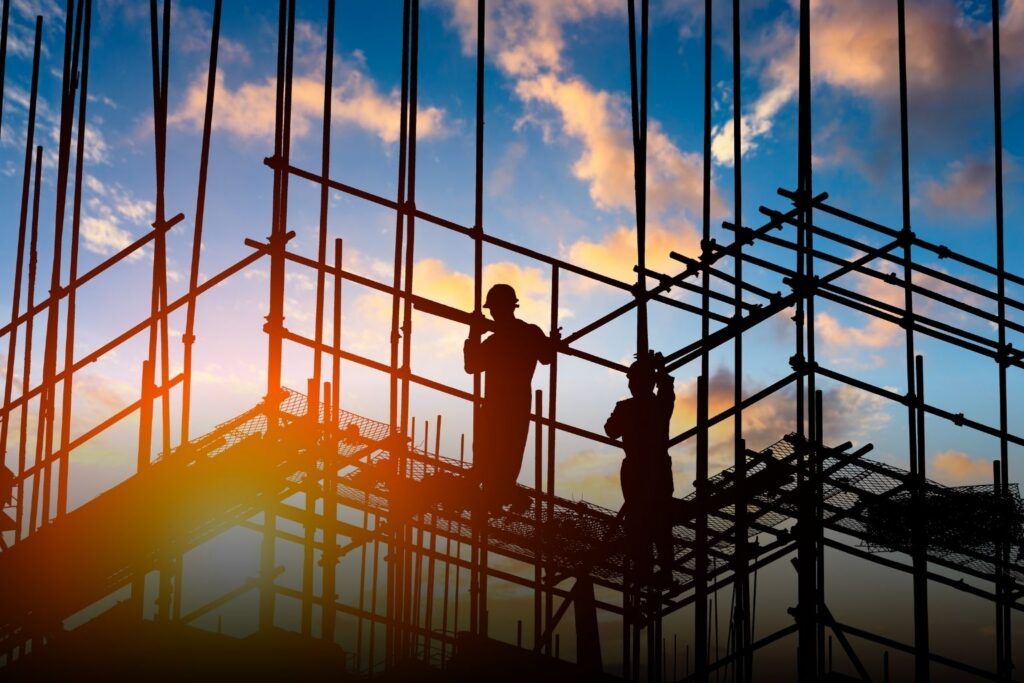
The key to a construction injury case is identifying third parties whose negligence contributed to the accident. Under Florida’s negligence laws, any party that owes a duty of care to workers on the site and breaches that duty can be held liable for resulting injuries. On a typical construction project, multiple entities have overlapping responsibilities for safety.
General contractors
Subcontractors
Property owners
Equipment manufacturers
Architects and engineers
Compensation in Construction Injury Third-Party Claims
A third-party claim supplements your workers’ compensation benefits with categories of compensation that the workers’ comp system does not provide. A construction injury attorney in Stuart at The Rubin Firm pursues every available dollar.
- Full medical expenses: Complete reimbursement for all medical treatment, not just what workers’ comp covers, including future surgeries, rehabilitation, and adaptive equipment.
- Full lost wages: Complete income replacement, not the two-thirds cap that workers’ comp imposes.
- Pain and suffering: Physical pain, emotional distress, anxiety, depression, and diminished quality of life, none of which workers’ comp compensates.
- Loss of earning capacity: The reduced ability to earn income in the future if permanent injuries prevent you from returning to construction work or any comparable occupation.
- Disfigurement: Permanent scarring, burn injuries, and amputations that affect your appearance and self-image.
Protecting Your Rights After a Construction Injury
Report the injury to your employer immediately:
This triggers workers’ compensation coverage and creates an official record of the incident. Florida law requires prompt reporting.
Do not sign anything beyond workers' comp paperwork:
Seek medical treatment:
Contact The Rubin Firm:
Photograph the scene:
Common Construction Injuries and Their Long-Term Consequences
Construction injuries tend to be more severe than injuries in many other industries because of the heights involved, the weight of the materials being handled, the power of the machinery being operated, and the inherent dangers of working with electricity, chemicals, and heavy structural elements. When a construction worker is hurt, the injury often falls into the catastrophic category, changing the trajectory of the worker’s life and the financial stability of the worker’s family.
Traumatic brain injuries from falls and struck-by incidents are among the most common and most devastating construction injuries. A worker who falls from a scaffold or is struck on the head by a falling object may sustain a brain injury that causes permanent cognitive impairment, personality changes, seizure disorders, and an inability to return to construction work or any other employment. Spinal cord injuries from falls, trench collapses, and equipment accidents can cause partial or complete paralysis, requiring lifetime medical care and personal assistance. Crush injuries and traumatic amputations occur when workers are caught in machinery, pinned between equipment and structures, or trapped in collapsing excavations. These injuries are not only physically devastating but emotionally traumatic, fundamentally altering the victim’s sense of identity and independence.
Electrocution injuries deserve special attention because they are often misunderstood. Electrical contact can cause cardiac arrest, severe burns at entry and exit points, nerve damage, muscle destruction, and internal organ injury. Even non-fatal electrocutions can result in chronic pain, neurological problems, and cognitive difficulties that persist for years. Workers who survive serious electrical contact may face a lifetime of medical complications that are not immediately apparent in the days following the incident.
Burns from construction fires, explosions, chemical exposures, and hot material contact can cause permanent disfigurement, chronic pain, restricted mobility, and significant psychological trauma. Burn treatment is among the most expensive and prolonged of all injury categories, often requiring multiple surgeries, skin grafts, compression therapy, and years of rehabilitation.
Stuart’s Growing Construction Industry and Worker Safety
Martin County and the broader Treasure Coast have experienced significant construction growth in recent years. New residential developments, commercial projects, road expansions, bridge repairs, and infrastructure upgrades keep construction crews working throughout the region. That growth creates jobs, but it also creates risk. The more active construction sites operating simultaneously, the more opportunities for accidents when safety protocols are cut or ignored.
Florida’s hot and humid climate adds another layer of danger for construction workers. Heat-related illness is a serious and sometimes fatal hazard on outdoor job sites, and it can impair a worker’s judgment and coordination, increasing the risk of falls, equipment errors, and other accidents. Afternoon thunderstorms that arrive suddenly during the summer months create lightning hazards, slippery surfaces, and reduced visibility on active construction sites. Responsible contractors plan for these conditions. Negligent ones ignore them.
We’re Here To Heil You Recover Compensation For:
- Injury or damages
- Injury & Medical
- Injury or damages
Serving Injured Construction Workers Across the Treasure Coast
The Rubin Firm represents construction workers injured on job sites throughout Stuart, Martin County, Port St. Lucie, Fort Pierce, Vero Beach, Jupiter, Palm Beach County, and the wider Treasure Coast and South Florida region. We handle claims arising from commercial, residential, and infrastructure construction projects of all sizes.
Referral Partnerships for Construction Injury Cases
Attorneys who handle workers’ compensation claims and recognize that their client may also have viable third-party claims trust The Rubin Firm to pursue the additional recovery. If you have a client with a serious construction injury in Martin County, contact us to discuss a referral.
Frequently Asked Questions About Stuart Construction Injury Claims
Can I file a lawsuit if I was injured on a construction site?
Yes, if a third party other than your direct employer contributed to your injury. Workers’ compensation is your exclusive remedy against your employer, but you may have separate negligence claims against general contractors, subcontractors, property owners, equipment manufacturers, and other parties whose negligence played a role in the accident.
Does an OSHA violation help prove my case?
OSHA violations documented by the U.S. Department of Labor serve as strong evidence of negligence in a civil lawsuit. A citation shows that a responsible party failed to comply with established federal safety standards, which can be powerful proof that the party breached its duty of care to workers on the site.
Can I receive more compensation than workers’ comp provides?
Yes. A third-party negligence claim provides compensation for pain and suffering, full lost wages (not the capped amount workers’ comp pays), loss of future earning capacity, and other damages that workers’ compensation does not cover. These claims frequently result in substantially higher total recovery for the injured worker.
What are the most dangerous construction hazards?
OSHA identifies falls, struck-by-object incidents, electrocutions, and caught-in/between hazards as the Fatal Four, responsible for the majority of construction fatalities nationwide. Equipment malfunctions, trench collapses, and chemical exposures are also significant hazards.
How long do I have to file a construction injury claim?
Workers’ compensation claims have specific reporting and filing deadlines. Third-party personal injury claims are subject to the general two-year statute of limitations under Florida law. Because construction sites change rapidly and evidence can disappear quickly, contacting an attorney as soon as possible after the injury is critical.
$150 Million
Hurt on the Job? You May Have More Options Than Workers' Comp.
Workers’ compensation is just the starting point. If a third party’s negligence contributed to your construction injury, the Stuart construction injury lawyers at The Rubin Firm can pursue additional compensation that covers the full scope of your losses.
Call (772) 283-2004 for a free consultation. Complete our contact form or chat live. There is no fee unless we recover for you.
 4.9 Rating on