

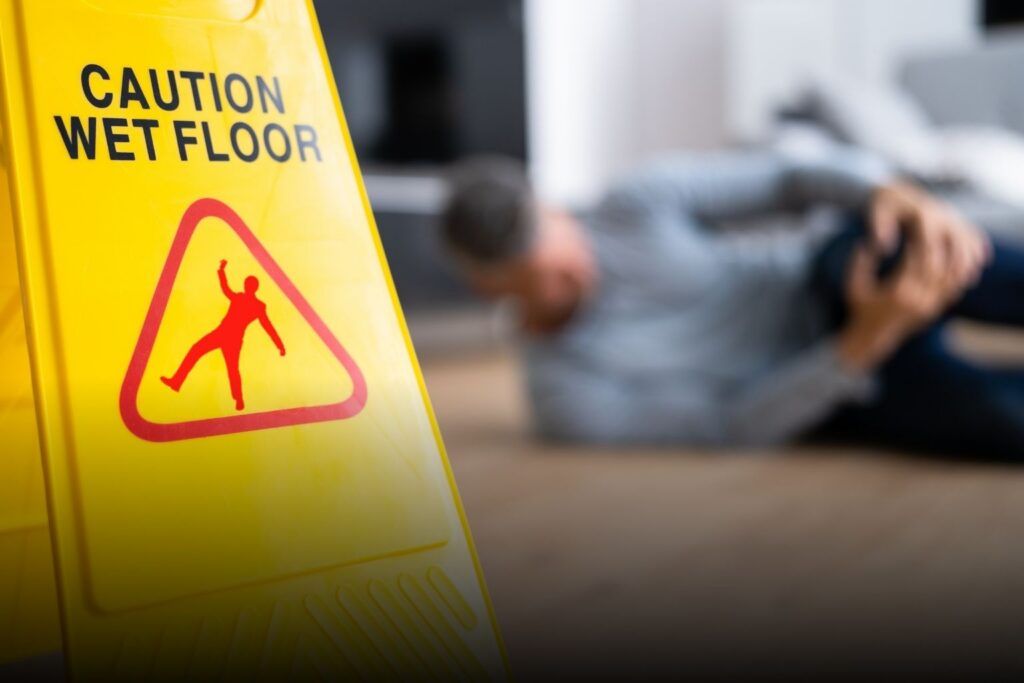
When you suffer a slip and fall accident in Stuart, Florida, the property owner or occupier may be liable for your injuries if they knew about a dangerous condition on their property, or should have known about it through reasonable care, and failed to fix it or warn you. Under Florida Statute § 768.0755, the burden falls on the injured person to prove that the property owner had actual or constructive knowledge of the hazardous condition. This means you must show more than just the fact that you fell. You need evidence that the property owner either created the danger, knew it existed, or should have discovered it through routine inspection.
Below, we break down how Florida’s premises liability law works, the types of evidence that strengthen your claim, and what steps to take after a fall. If you have already been injured in a slip and fall in Stuart or anywhere on the Treasure Coast, the slip and fall attorneys at The Rubin Firm can evaluate your case at no cost.
Key Takeaways
- Property owners in Florida have a legal duty to maintain reasonably safe conditions for visitors and guests.
- You must prove the owner knew or should have known about the dangerous condition that caused your fall under Florida Statute § 768.0755.
- Common hazards include wet floors, uneven pavement, poor lighting, loose handrails, and cluttered walkways.
- Act quickly after a fall: report it to the property owner, seek medical attention, and document the scene with photos before the hazard is cleaned up or repaired.
How Florida Premises Liability Law Works
Florida law does not automatically make a property owner liable every time someone falls on their property. The legal standard hinges on knowledge. You must prove that the owner or occupier either knew about the hazardous condition, such as a wet floor, a broken step, or a pothole in a parking lot, or that the condition existed long enough that a reasonable property owner would have discovered and corrected it through ordinary maintenance.
Before 2010, Florida placed a lighter burden on injury victims. The law allowed courts to infer that a business should have known about a hazard based solely on how long it had been present. The legislature changed that standard, and today the injured person bears a tougher evidentiary burden. This is exactly why preserving evidence immediately after a fall matters so much. Without documentation, your claim can stall.
Where Slip and Fall Accidents Happen Most in Stuart
Stuart’s mix of retail shops, waterfront restaurants, grocery stores, medical offices, and outdoor recreation areas creates plenty of opportunities for falls. Wet floors inside Publix or Winn-Dixie, uneven sidewalks along downtown Osceola Street, rain-slicked walkways outside restaurants on the Stuart boardwalk, and poorly maintained parking lots near commercial plazas along US 1 are among the most common scenarios our firm sees.
Shopping centers, apartment complexes, hotels, and government buildings each owe a duty of care to people lawfully on their premises. That duty includes regular inspections, prompt cleanup of spills, adequate lighting, and proper maintenance of walkways, stairs, and handrails. When they fall short, they can be held accountable.
Seasonal weather patterns along the Treasure Coast add another layer of risk. Heavy afternoon rain showers can turn entrances into slip hazards within minutes. Businesses that fail to place mats, deploy signage, or mop up standing water in a timely manner may be negligent if a customer falls as a result.
Proving Your Slip and Fall Claim: The Evidence That Matters
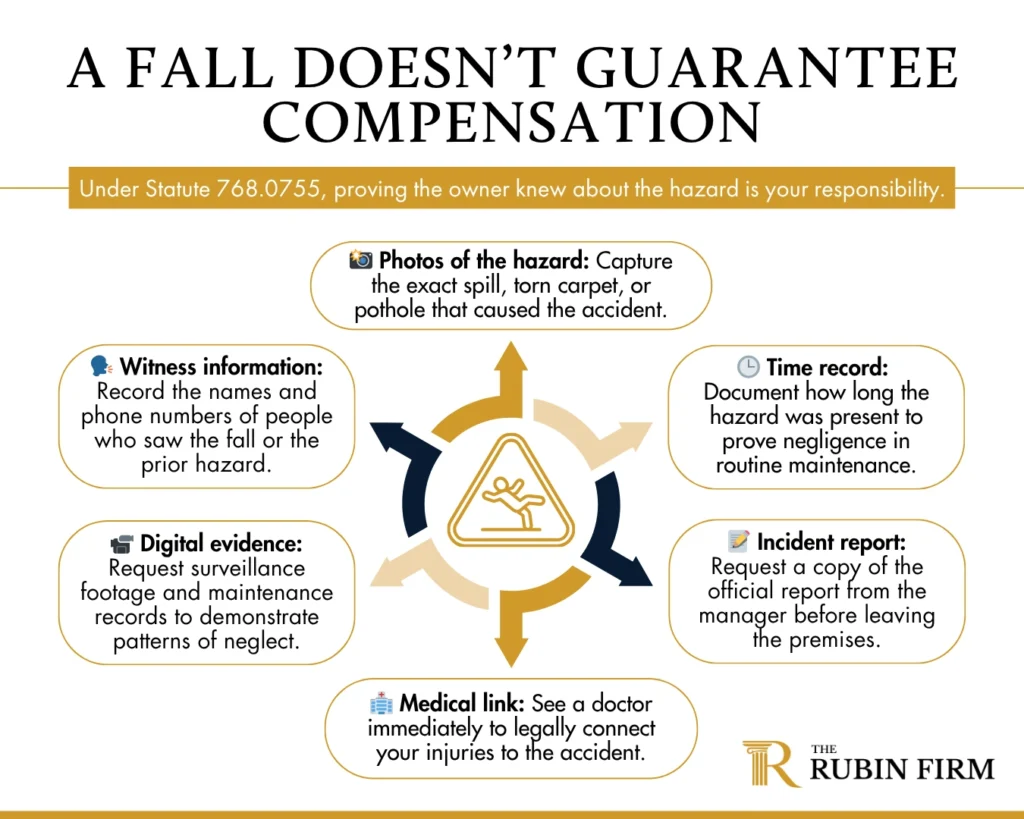
The strongest slip and fall cases are built on evidence gathered in the minutes and hours after the incident. Photograph the exact spot where you fell, including the hazard itself: the puddle, the torn carpet, the cracked sidewalk, or the missing handrail. Take wide shots showing the surrounding area and any lack of warning signs or barriers. If you were inside a store, ask the manager to create an incident report and get a copy before you leave. Note the time of your fall, since the length of time a hazard exists before an injury is a key factor in proving constructive knowledge.
Witness statements carry significant weight. If anyone saw you fall or noticed the hazard before you did, get their name and phone number. Medical records linking your injuries directly to the fall are essential. See a doctor promptly, describe the fall in detail, and follow through with every recommended treatment. Your Stuart premises liability attorney can also subpoena security camera footage, maintenance logs, and prior incident reports to demonstrate that the property owner had a pattern of negligence.
What Compensation Can You Recover?
If you can prove liability, Florida law allows you to recover compensation for medical expenses, including emergency care, surgery, physical therapy, and future treatment. You may also claim lost wages if the injury kept you from working, and diminished earning capacity if your ability to work has been permanently affected. Non-economic damages cover your pain and suffering, emotional distress, and the impact the injury has had on your daily life and activities. In cases involving particularly reckless or egregious behavior by the property owner, punitive damages may also be available.
Keep in mind that Florida’s modified comparative negligence rule applies to slip and fall cases. If the property owner argues you were partially responsible for your fall, perhaps by wearing inappropriate footwear or being distracted by your phone, the jury can reduce your award accordingly. If you are found more than 50% at fault, you recover nothing.
Injured in a Fall? Take Action to Protect Your Rights

Slip and fall injuries can be far more serious than people expect. Broken bones, head injuries, herniated discs, and torn ligaments can keep you out of work for months and leave you with lasting pain. The property owner’s insurance company will try to minimize what happened to you. The Rubin Firm has been holding negligent property owners accountable for over sixty years across Stuart, Martin County, and the Treasure Coast.
Call us at (772) 283-2004, fill out our online contact form, or start a live chat on our website. Your consultation is free, and you pay nothing unless we recover compensation for you.
Frequently Asked Questions
How long do I have to file a slip and fall lawsuit in Florida?
Florida’s statute of limitations gives you two years from the date of the accident to file a premises liability lawsuit. If you miss this deadline, the court will almost certainly bar your claim regardless of how strong the evidence is.
What if I fell on government property in Stuart?
Claims against government entities in Florida follow different rules. You generally must file a written notice of claim within three years, and there are caps on damages. These cases also involve sovereign immunity protections that limit when and how the government can be sued. An attorney experienced in government liability claims can guide you through the process.
Does the property owner’s insurance cover my injuries?
Most commercial properties carry general liability insurance that covers slip and fall claims. Residential properties may be covered under homeowner’s insurance. The property owner’s insurer will likely investigate your claim and may attempt to deny it or offer a reduced settlement. Having legal representation ensures your claim is taken seriously.
What if there was a ‘wet floor’ sign and I still fell?
A warning sign does not automatically absolve the property owner of liability. If the sign was placed in an area where it was not visible, or if the hazardous condition should have been corrected rather than simply marked with a sign, you may still have a valid claim. The question is whether the property owner acted reasonably under the circumstances.
Can I file a claim if I fell in a parking lot?
Yes. Parking lot owners and operators have the same duty to maintain safe conditions. Potholes, cracked pavement, oil spills, inadequate lighting, and missing curb markers are all hazards that can give rise to a premises liability claim if the owner knew or should have known about the danger.