


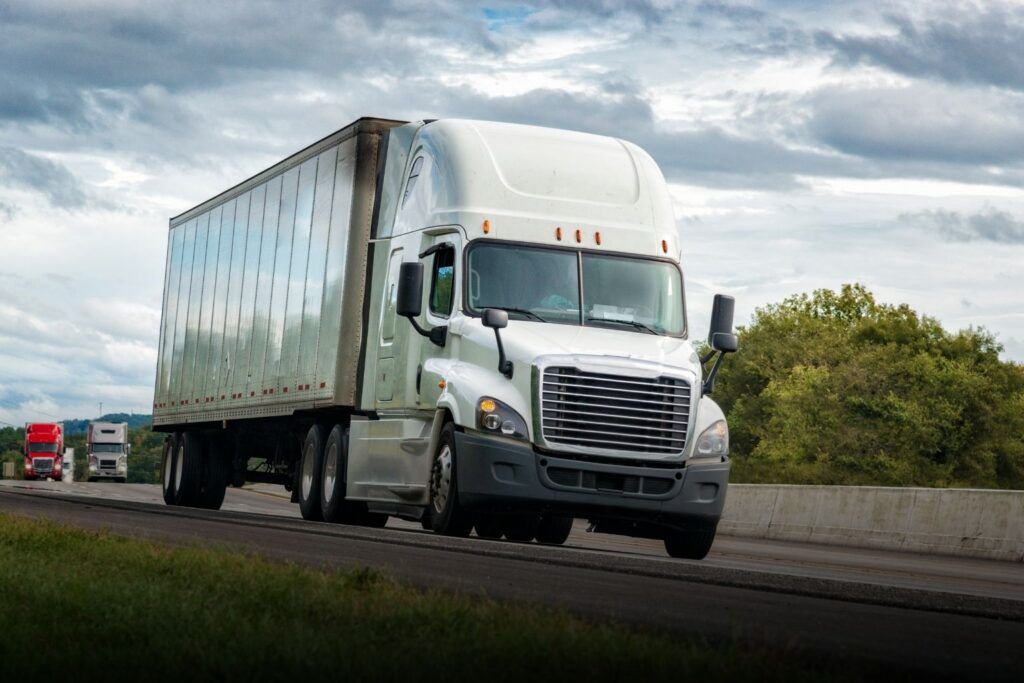
A tractor-trailer crash isn’t just a bigger version of a car accident. The mechanical complexity of an eighteen-wheeler, the federal regulatory framework governing its operation, and the layered corporate structure typically behind it create a legal and practical landscape bearing almost no resemblance to that of a standard vehicle collision. When a fully loaded tractor-trailer weighing up to eighty thousand pounds under federal regulations collides with a passenger vehicle on the Florida Turnpike near Palm City or on I-95 approaching Stuart, the resulting physics are categorically different from those of a passenger vehicle crash. The response from the other side is also different. Trucking carriers, freight brokers, and their insurance teams understand that tractor-trailer crashes generate serious injury claims, and they begin preparing for those claims long before an injured victim leaves the hospital. What happens in the hours, days, and weeks immediately following a tractor-trailer accident in Florida can determine whether a seriously injured person recovers full compensation or settles for much less because necessary evidence was lost before it could be collected.
The Rubin Firm is ready to act immediately on your behalf if you were injured in a tractor-trailer crash on the Treasure Coast or anywhere in Florida. Call (772) 283-2004, fill out our contact form, or use live chat to speak with our team today.
Key Takeaways
- Tractor-trailer accidents involve unique mechanical, regulatory, and liability considerations that distinguish them from standard commercial truck crashes and require specific legal expertise to address effectively.
- The combination unit of a tractor and trailer creates distinct failure points, including jackknife events, trailer swing, brake system failures, and coupling mechanism defects, that standard vehicle crash analysis does not capture.
- Federal Motor Carrier Safety Administration regulations impose specific obligations on tractor-trailer operators and carriers that, when violated, become powerful evidence of negligence.
- Freight brokers who arranged the shipment may share liability alongside the carrier and driver in Florida tractor-trailer crash cases.
- A truck accident attorney with specific tractor-trailer litigation experience can identify every liable party, preserve the electronic and mechanical evidence most critical to the claim, and fight for compensation that reflects the full cost of what happened.
Understand What Makes Tractor-Trailer Crashes Legally Distinct
Crashes involving tractor-trailers involve mechanical systems, regulatory obligations, and liability structures specific to combination vehicles, creating legal issues not present in standard commercial truck cases.
The distinction between a tractor-trailer and a straight commercial truck isn’t just a matter of size. A tractor-trailer is a combination vehicle, meaning its power and cargo units are mechanically connected yet separately articulated. This creates crash dynamics, liability questions, and evidence categories that don’t exist in crashes involving single-unit trucks.
Jackknife crashes occur when the trailer swings outward relative to the tractor, typically during hard braking or on slippery road surfaces. This creates a situation in which the combination vehicle occupies multiple lanes simultaneously, leaving oncoming or adjacent traffic with no time to react. Jackknife events are often caused by improper brake adjustment, brake system failure, or driver error during emergency braking, each of which points to a different liable party and requires different evidence to prove.
Trailer swing crashes, also known as underride crashes, occur when a passenger vehicle slides under the trailer during or after a collision. Federal regulations require rear underride guards on trailers to prevent passenger vehicles from traveling beneath the trailer in a rear collision. However, these guards aren’t always properly maintained, and they’re not always designed to withstand the forces involved in high-speed crashes. When an underride guard fails and a passenger vehicle occupant sustains catastrophic head or neck injuries as a result, the trailer manufacturer and the carrier who failed to maintain the guard may both be liable, as may the driver.
Coupling mechanism failures represent another category of tractor-trailer-specific liability. When the fifth wheel coupling, the mechanical connection between the tractor and trailer, fails at highway speed, the trailer can separate entirely and become an uncontrolled projectile on the roadway. These failures are usually caused by inadequate maintenance, an improper coupling procedure, or a defective coupling component.
Prioritize Medical Evaluation Before Anything Else
The single most important step for both your physical recovery and the legal foundation of your claim is to seek medical evaluation immediately after a tractor-trailer crash, regardless of how you feel at the scene.
The forces involved in a tractor-trailer collision can cause injuries that often don’t manifest immediately. Traumatic brain injuries, spinal cord compression, internal organ damage, and soft tissue trauma in the cervical and thoracic spine can all have delayed symptom onset because the body’s stress response temporarily suppresses pain signaling. A victim who declines an evaluation because they feel functional is making a decision based on unreliable neurological feedback.
Florida’s no-fault PIP system requires crash victims to begin medical treatment within fourteen days of the incident to maintain benefit eligibility. In a tractor-trailer crash involving serious injuries, waiting anywhere near that timeframe carries medical and legal risks. Emergency evaluation, full diagnostic imaging (including CT and MRI, when necessary), and specialist referral for neurological and orthopedic injuries should occur on the day of the crash. The medical record created by this evaluation links your injuries to the crash, which the tractor-trailer carrier’s insurance team cannot dispute.
Preserve Evidence Specific to the Tractor-Trailer
Crashes involving tractor-trailers generate unique electronic and mechanical evidence that can be lost or destroyed within days if legal preservation action is not taken immediately.
Tractor-trailer crash cases differ significantly from standard vehicle crash cases in terms of the actions an attorney must take quickly on a client’s behalf. The most valuable evidence for a tractor-trailer crash claim exists in systems and records controlled by the carrier that aren’t automatically preserved.
For example, the tractor’s electronic control module records speed, throttle position, brake application, and other operational data in a rolling window that may be overwritten when the vehicle returns to service. The trailer may have its own sensor systems that record load distribution, brake pressure, and coupling status. If the combination unit is equipped with a forward- or cab-facing dashcam, the footage it captures of the moments before and during the crash can be decisive for determining liability.
The tractor’s electronic logging device (ELD) records the driver’s hours of service with a specificity and tamper resistance that paper logs never provided. Hours-of-service violations are among the most common regulatory failures in serious tractor-trailer crashes. The ELD record confirms or contradicts the driver’s account of their activity in the hours preceding the crash.
Beyond electronic systems, evidence of the tractor-trailer’s physical condition at the time of the crash deteriorates or disappears as soon as the vehicle is repaired and returned to service. Brake adjustment measurements, tire condition, fifth wheel coupling integrity, and the condition of the trailer’s underride guard all require a physical inspection before the vehicle is repaired. A truck accident attorney can send a preservation demand and arrange for an independent mechanical inspection before the carrier’s repair team addresses the damage.
Identify Every Party Who May Be Liable
In a Florida tractor-trailer crash, liability extends beyond the driver to include the carrier, the trailer owner (if different from the carrier), the freight broker who arranged the shipment, the cargo shipper, and potentially the manufacturer of any failed component.
The corporate structure behind a tractor-trailer on a Florida highway is often more complex than it seems. For example, the tractor may be owned by the carrier. The trailer may be owned by a separate leasing company. The driver may be a carrier employee, a leased driver, or an independent owner-operator operating under the carrier’s Department of Transportation (DOT) authority. A broker may have arranged the freight, selecting the carrier based on price rather than safety record. A third-party logistics company may have loaded the cargo at a warehouse facility in Palm Beach County.
Each of these relationships carries its own liability potential. Identifying them requires an investigation that begins with the carrier’s registration records, the bill of lading for the shipment in question, the driver’s contractual relationship with the carrier, and the freight broker’s selection and vetting records.
Freight broker liability is a developing area of tractor-trailer crash law that has gained significant attention following the Ninth Circuit’s decision in Sperl v. C.H. Robinson and subsequent litigation in multiple jurisdictions. When a freight broker selects a carrier with a documented safety record that should have disqualified it from consideration, that selection decision may support a negligent hiring claim against the broker, which runs alongside and independently of the claim against the carrier. Florida courts have considered this theory in tractor-trailer litigation. A truck accident attorney with experience in combination vehicles will evaluate whether broker liability applies to your crash.
Don’t Engage With the Carrier's Representatives Without Legal Guidance
Without attorney guidance, statements made to a tractor-trailer carrier’s insurance representatives, safety investigators, or legal team can permanently affect the value of a claim in ways that are difficult or impossible to reverse.
Tractor-trailer carriers deploy accident response resources quickly and efficiently due to the serious financial exposure these crashes create. Within hours of a serious crash, a carrier’s safety director, insurance representative, and potentially outside counsel may all be involved in the response. Their purpose isn’t to assist the injured victim. Rather, they aim to document conditions, gather statements, and build a factual and legal record that serves the carrier’s interests in subsequent litigation.
An injured victim who speaks with a carrier representative, signs any document, or consents to access to their medical records or personal accounts before retaining a truck accident attorney is operating without the protection that legal representation provides. The carrier’s team is experienced. They know what to ask, how to frame questions, and how to use answers. You are not required to engage with them at all before you have legal representation.
Understand the Regulatory Framework That Governs Tractor-Trailer Operations
The Federal Motor Carrier Safety Administration (FMCSA) imposes specific, enforceable obligations on tractor-trailer operators and carriers. Violations of these regulations are powerful evidence of negligence in Florida crash litigation.
The Federal Motor Carrier Safety Administration (FMCSA) regulatory framework that governs tractor-trailer operations covers every aspect of combination vehicle safety, including driver qualification, hours of service, vehicle inspection, maintenance, and cargo securement. These regulations are important for seriously injured crash victims because they establish the standard by which carriers are judged, and violations create presumptions of negligence that shift the burden of proof to the carrier.
Hours-of-service violations are among the most prevalent regulatory failures in serious tractor-trailer crashes. A driver who has been behind the wheel beyond the federally permitted limit is fatigued to the point of clinical impairment. The electronic logging device (ELD) record documenting the violation is one of the most powerful pieces of evidence in a tractor-trailer crash case.
Cargo securement regulations under FMCSA Part 393 establish requirements for securing freight within and on a trailer to prevent shifting during transit. If shifting cargo causes a tractor-trailer to crash on a Treasure Coast highway, the securement records and physical evidence showing how the load was distributed at the time of the crash become central to the liability analysis.
Vehicle inspection and maintenance regulations require carriers to conduct and document pre-trip inspections, periodic maintenance, and out-of-service repairs before returning a vehicle to commercial operation. A maintenance record showing deferred brake system repairs that subsequently failed in a crash is evidence not only of negligence but also of a deliberate decision to prioritize operational continuity over the safety of others on the road. Rather, it is evidence of a deliberate decision to prioritize operational continuity over the safety of others sharing the road.
Protect Your Rights After a Florida Tractor-Trailer Crash. Call us now for help!

The company that owns the tractor-trailer that injured you has experience, resources, and a response infrastructure built specifically for situations like yours. They do not expect an injured victim whose legal team acted quickly, preserved the mechanical and electronic evidence they were counting on controlling, and built a case that holds every liable party in the corporate structure behind the crash accountable. The Rubin Firm represents victims of tractor-trailer crashes across Stuart, Palm City, Jensen Beach, Port St. Lucie, Fort Pierce, Vero Beach, and throughout Florida, providing the specific expertise these cases demand.
Call (772) 283-2004, fill out our contact form, or use live chat to speak with our team today.
Disclaimer: This blog post is intended for general informational and educational purposes only and does not constitute legal advice. Every case is different. You should not act or refrain from acting on the basis of this content without consulting a licensed attorney. Federal regulations and Florida statutes referenced reflect the law as understood at the time of publication and are subject to change. The statute of limitations referenced may vary based on individual circumstances. Past results do not guarantee future outcomes. The hiring of a lawyer is an important decision that should not be based solely upon advertisements. Before you decide, ask us to send you free written information about our qualifications and experience. The Rubin Firm is located at 2055 South Kanner Highway, Stuart, FL 34994.
Frequently Asked Questions
How are tractor-trailer crashes legally different from crashes involving straight commercial trucks?
A tractor-trailer’s combination vehicle structure creates distinct failure modes, including jackknifing, trailer swinging, underriding, and coupling failures, which don’t exist in straight truck crashes. Liability may extend to trailer owners, freight brokers, and cargo loaders in ways that straight truck crashes don’t. Additionally, the categories of mechanical evidence are broader, and the federal regulatory framework includes trailer-specific requirements that add layers of potential liability.
What if the tractor-trailer driver was an independent owner-operator?
In Florida crash litigation, independent owner-operators operating under a carrier’s DOT authority are generally treated as agents of that carrier for liability purposes. The carrier is liable both vicariously and for negligent entrustment, regardless of whether the driver is technically an employee or contractor. A truck accident attorney can evaluate the specific contractual relationship and advise on how it affects the available claims.
Which FMCSA violations most commonly appear in tractor-trailer crash cases?
The most frequently litigated FMCSA violations in Florida tractor-trailer crash cases are hours of service violations documented through ELD records; brake system deficiencies identified in pre-crash inspection records; cargo securement failures documented through load records and physical evidence; and driver qualification failures, including lapsed medical certificates and disqualifying driving history.
How long do I have to file a claim for a tractor-trailer accident in Florida?
Florida’s statute of limitations for personal injury claims is generally two years from the crash date, following legislative changes that took effect in March 2023. However, the evidence most critical to tractor-trailer crash cases deteriorates rapidly, so it is essential to consult a lawyer early on, regardless of where you are within that two-year window.
Does The Rubin Firm handle tractor-trailer accident cases on contingency?
Yes. We handle these cases on a contingency fee basis, so you won’t pay any upfront legal fees. We are compensated only if we secure compensation for you, and our fee comes from that recovery. The initial consultation is free and carries no obligation.