
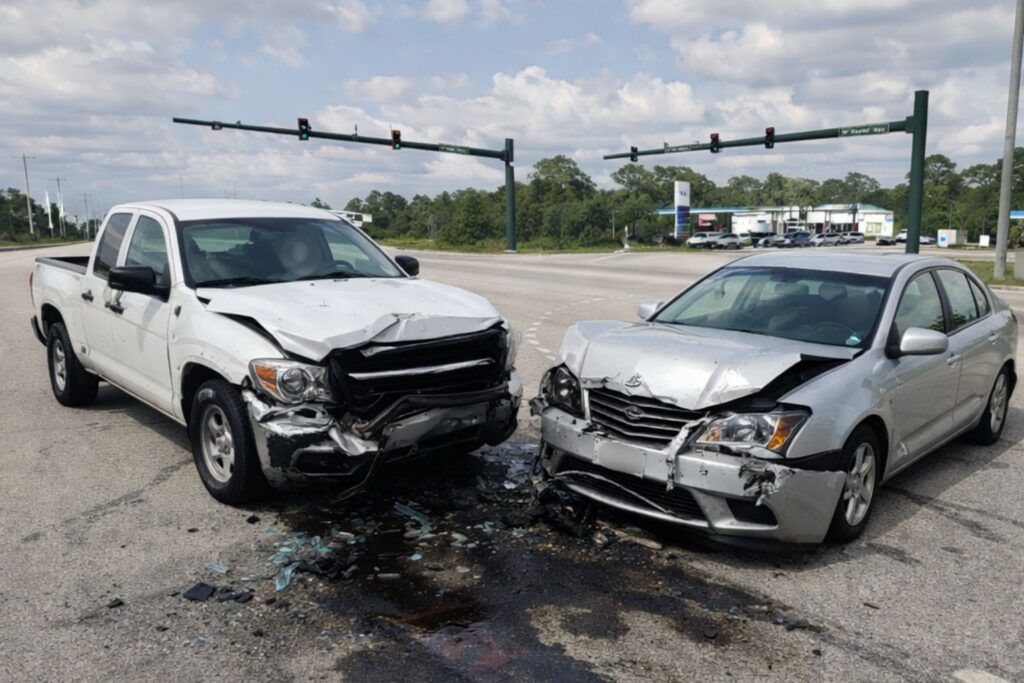
Nobody gets behind the wheel expecting the day to end in a crash. You have places to be, people counting on you, and a routine that a collision on I-95 or US-1 near Stuart can shatter in a matter of seconds. What follows is rarely simple. There are medical appointments, insurance calls, rental car logistics, and the slow, exhausting realization that the physical pain is only one part of what you are dealing with. The financial and legal questions that pile up alongside the medical ones are often just as overwhelming, and they start with a question that shapes everything that comes next: who is liable for what happened to you? Understanding how liability works in Florida car accident cases is not just a legal exercise. It is the foundation of every decision you will make about your recovery, your claim, and your future. And in Florida, that foundation looks different from most other states in ways that matter enormously to the compensation available to you.
If you were injured in a car crash on the Treasure Coast or anywhere in Florida, The Rubin Firm is here to help. Call (772) 283-2004, fill out our contact form or use live chat to speak with our team today.
Key Takeaways
- Florida operates under a no-fault insurance system, which means your own Personal Injury Protection coverage pays for initial medical expenses and lost income regardless of who caused the crash.
- Stepping outside the no-fault system to pursue a claim against the at-fault driver requires meeting Florida’s serious injury threshold.
- Florida’s modified comparative fault rule means your compensation is reduced by your percentage of fault, and you cannot recover if you are found more than fifty percent responsible.
- Multiple parties can share liability in a Florida car accident case, including drivers, employers, vehicle manufacturers, and government entities.
- A car accident lawyer can evaluate whether your injuries meet the serious injury threshold, identify all liable parties, and fight for the full compensation you deserve.
How Does Florida's No-Fault Insurance System Work?
Florida’s no-fault system requires drivers to carry Personal Injury Protection coverage that pays for their own medical expenses and lost income after a crash, regardless of who was at fault.
Florida is one of a small number of states that operates under a no-fault insurance framework, and understanding it is the starting point for understanding liability in any Florida car accident case. Under Florida law, every registered vehicle must carry a minimum of ten thousand dollars in Personal Injury Protection coverage, commonly called PIP. When a crash occurs, your own PIP coverage pays for a portion of your medical expenses and lost income up to your policy limits, regardless of which driver caused the collision.
The practical implication is that after most car crashes in Florida, the immediate path to compensation for medical treatment runs through your own insurance rather than through the at-fault driver’s policy. PIP covers eighty percent of reasonable medical expenses and sixty percent of lost wages up to the policy limit, with treatment required to begin within fourteen days of the crash to maintain eligibility for coverage.
For crashes involving minor injuries, the no-fault system is designed to provide prompt payment without requiring a determination of fault. For crashes involving serious injuries, the system creates a path to step outside the no-fault framework and pursue a claim directly against the at-fault driver for the full range of damages that PIP does not cover
What Is Florida's Serious Injury Threshold?
To pursue a claim against the at-fault driver beyond your PIP coverage in Florida, your injuries must meet a serious injury threshold defined by Florida law.
Florida Statute Section 627.737 establishes the threshold that a crash victim’s injuries must meet before they can bring a lawsuit against the at-fault driver for pain and suffering and other non-economic damages. The serious injury threshold is satisfied when a crash victim sustains significant and permanent loss of an important bodily function, permanent injury within a reasonable degree of medical probability, significant and permanent scarring or disfigurement, or death.
For injured drivers and passengers on the Treasure Coast, this threshold is one of the most consequential legal determinations in any car accident case. A crash victim whose injuries do not meet the threshold is limited to their PIP coverage and any available medical payments coverage for non-economic losses. A crash victim whose injuries do meet the threshold can pursue a claim against the at-fault driver for pain and suffering, emotional distress, loss of enjoyment of life, and the full scope of economic damages that PIP does not cover.
Determining whether injuries meet the serious injury threshold requires careful medical documentation and legal analysis. Insurance companies routinely contest threshold determinations, and having a car accident lawyer who understands how Florida courts have interpreted the statutory language in specific injury contexts is essential to protecting your right to pursue full compensation.
How Is Fault Determined in a Florida Car Accident Case?
Fault in a Florida car accident case is determined by evaluating each party’s conduct against the standard of reasonable care, and Florida’s modified comparative fault rule allocates liability among multiple parties based on their respective percentages of responsibility.
Florida adopted a modified comparative fault system effective March 2023, replacing the previous pure comparative fault framework. Under the current law, an injured party can recover compensation as long as their share of fault for the crash does not exceed fifty percent. If a jury finds that an injured driver was fifty-one percent or more at fault, that driver recovers nothing. When fault is below fifty percent, the compensation available is reduced by the injured party’s percentage of responsibility.
This change has significant practical implications for car accident cases in Stuart, Port St. Lucie, and across the Treasure Coast. Insurance adjusters now have a stronger incentive to investigate and argue comparative fault against injured claimants, knowing that pushing a claimant’s fault above fifty percent eliminates their recovery entirely. Common arguments insurance companies raise to assign partial fault to injured drivers include claims of speeding, distracted driving, failure to use a turn signal, or failure to take evasive action. A car accident lawyer evaluates these arguments against the actual evidence and builds the strongest possible case for a fault allocation that accurately reflects what happened.
Who Can Be Held Liable in a Florida Car Accident?
Liability in a Florida car accident case can extend beyond the at-fault driver to include employers, vehicle owners, manufacturers, and government entities depending on the specific circumstances of the crash.
Most people involved in a car crash in Florida think about liability in terms of the other driver. That is a natural starting point, but it is rarely the complete picture. Identifying every party whose negligence contributed to a crash is one of the most important functions a car accident lawyer performs, because the full scope of available compensation often depends on reaching beyond the individual driver to the entities and systems behind them.
Employer liability arises under the legal doctrine of respondeat superior when an employee causes a crash while acting within the scope of their employment. A delivery driver, a sales representative making a client visit, or a commercial truck driver on an active route are all acting within the scope of employment when a crash occurs. In these situations, the employer’s commercial insurance policy, which typically carries significantly higher limits than a personal auto policy, becomes a source of compensation for seriously injured victims.
Vehicle owner liability can arise separately from driver liability under Florida’s dangerous instrumentality doctrine, which holds that the owner of a motor vehicle who voluntarily entrusts it to another person can be held liable for the driver’s negligent operation of that vehicle. This doctrine gives injured Florida crash victims access to the vehicle owner’s insurance coverage in addition to the driver’s, which can be significant when the at-fault driver’s personal policy limits are insufficient.
Product liability applies when a defective vehicle component contributed to the crash or worsened the injuries that resulted. Defective braking systems, tire failures, and airbag malfunctions are documented contributors to serious crash injuries in cases where the vehicle manufacturer bears responsibility alongside or instead of the driver.
Government entity liability arises when dangerous road conditions, defective traffic signals, inadequate signage, or missing safety infrastructure contributed to a crash. Claims against government entities in Florida carry specific notice requirements and procedural rules that differ from standard personal injury claims and require prompt legal attention to preserve.
You can call (843) 881-8644 or complete our contact form to schedule a free consultation and connect with our team.
What Compensation May Be Available in a Florida Car Accident Case?
Florida car accident victims who meet the serious injury threshold may recover both economic and non-economic damages from the at-fault party, in addition to the PIP benefits available under their own policy.
Economic damages in a Florida car accident case include all measurable financial losses connected to the crash. Medical expenses beyond what PIP covers, including hospitalization, surgery, specialist care, physical therapy, and future treatment costs, are recoverable from the at-fault driver when the serious injury threshold is met. Lost income above the sixty percent covered by PIP, and lost earning capacity for victims whose injuries permanently affect their professional lives, are also recoverable.
Non-economic damages address the personal harm that financial documentation cannot capture. Pain and suffering, emotional distress, loss of enjoyment of life, and loss of consortium for married victims are all available to crash victims who meet the serious injury threshold. These damages are frequently the largest component of a serious injury car accident claim and are the category most aggressively contested by insurance companies and their defense teams.
In cases involving extreme recklessness, including crashes caused by a driver under the influence of alcohol or drugs, punitive damages may be available under Florida law. These require specific procedural steps to pursue and are not available in every case, but when the facts support them they can significantly increase the total recovery.
Protect Your Rights After a Florida Car Accident
Understanding liability in a Florida car accident case is complicated by the no-fault system, the serious injury threshold, the modified comparative fault framework, and the range of parties who may share responsibility for what happened to you. Navigating all of that while you are trying to heal from serious injuries is not something you should have to do alone. The Rubin Firm represents injured drivers, passengers, and their families across Stuart, Palm City, Jensen Beach, Port St. Lucie, Fort Pierce, Vero Beach, and throughout the Treasure Coast, fighting for the full compensation they deserve from every party responsible for their harm.
Call (772) 283-2004,complete our contact form to schedule a free consultation and connect with our team.
Disclaimer: This blog post is intended for general informational and educational purposes only and does not constitute legal advice. Every case is different. You should not act or refrain from acting on the basis of this content without consulting a licensed attorney. Florida statutes and legal standards referenced reflect the law as understood at the time of publication and are subject to change. The statute of limitations referenced may vary based on individual circumstances. Past results do not guarantee future outcomes. The hiring of a lawyer is an important decision that should not be based solely upon advertisements. Before you decide, ask us to send you free written information about our qualifications and experience. The Rubin Firm is located at 2055 South Kanner Highway, Stuart, FL 34994.
Frequently Asked Questions
Does Florida still require drivers to carry no-fault insurance?
Yes. As of the time of publication, Florida still requires drivers to carry a minimum of ten thousand dollars in Personal Injury Protection coverage. Florida has considered eliminating its no-fault system in recent legislative sessions, and families should consult an attorney or review current Florida law for the most up to date requirements, as this area of law is subject to ongoing legislative activity.
What if the at-fault driver does not have insurance?
Florida requires drivers to carry PIP and property damage liability coverage but does not mandate bodily injury liability coverage for most drivers. When an at-fault driver lacks bodily injury coverage, uninsured motorist coverage under your own policy may be the primary source of compensation for your injuries. A car accident lawyer can identify all available coverage across every applicable policy.
How long do I have to file a car accident lawsuit in Florida?
Florida’s statute of limitations for negligence claims, including car accident cases, is generally two years from the date of the crash following changes effective March 2023. Missing this deadline can permanently eliminate your right to compensation. Consulting a car accident lawyer promptly after a crash is the most reliable way to protect your legal options.
Should I accept the insurance company’s first settlement offer?
Rarely. Initial settlement offers are made before the full medical picture is known and before future care costs, lost earning capacity, and non-economic damages are properly assessed. Accepting an early offer and signing the accompanying release eliminates all future claims related to the crash. A car accident lawyer can evaluate any offer against the complete picture of your damages before recommending a response.
What if I was a passenger in the crash?
Passengers injured in Florida car crashes have the same right to pursue compensation as drivers and are almost categorically not at fault for the collisions that hurt them. A passenger may have claims against one or both drivers involved, and a car accident lawyer can identify every available source of recovery based on the specific circumstances.